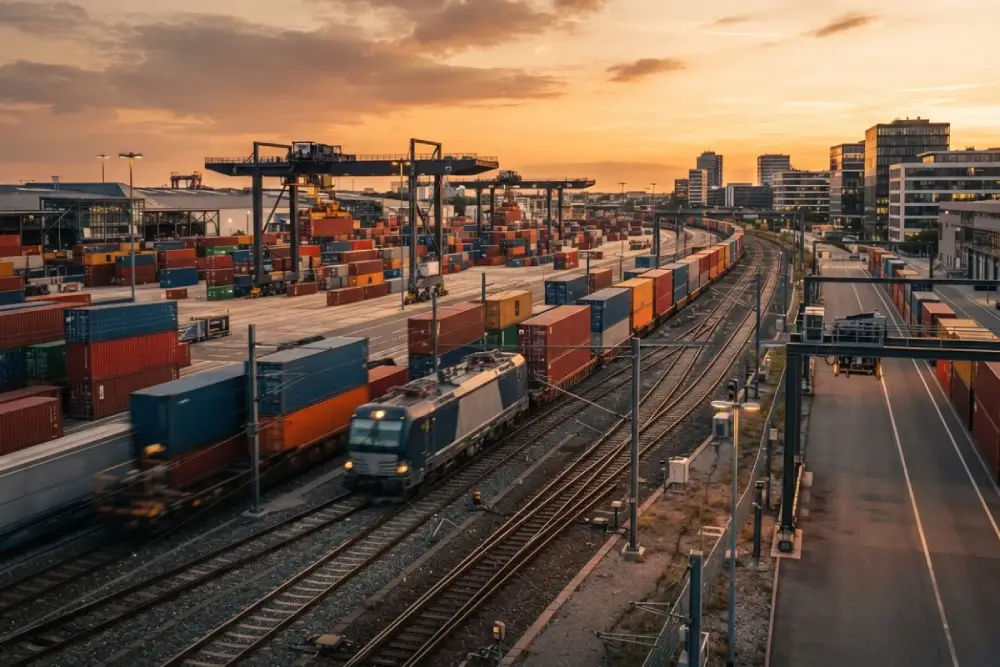
Any exporter who has watched a shipment sit stranded behind a border knows that in Central Asia, nothing breaks the supply chain faster than a missing wagon. The cargo is loaded, the buyer is waiting, the contract carries a late-delivery penalty — and there is no rolling stock available. That single missing link pushes storage costs up and erodes the export margin. Renting a freight wagon in this market is not just a logistics decision; it is a financial and operational one that directly affects your bottom line. This guide walks through everything from choosing the right railcar type to the Sarakhs route, customs documents and the hidden costs that never appear in the first quote — written for exporters of steel, minerals, petrochemicals and packaged goods shipping to Kazakhstan, Uzbekistan, Turkmenistan and Tajikistan.
Why Central Asia makes rail freight unavoidable
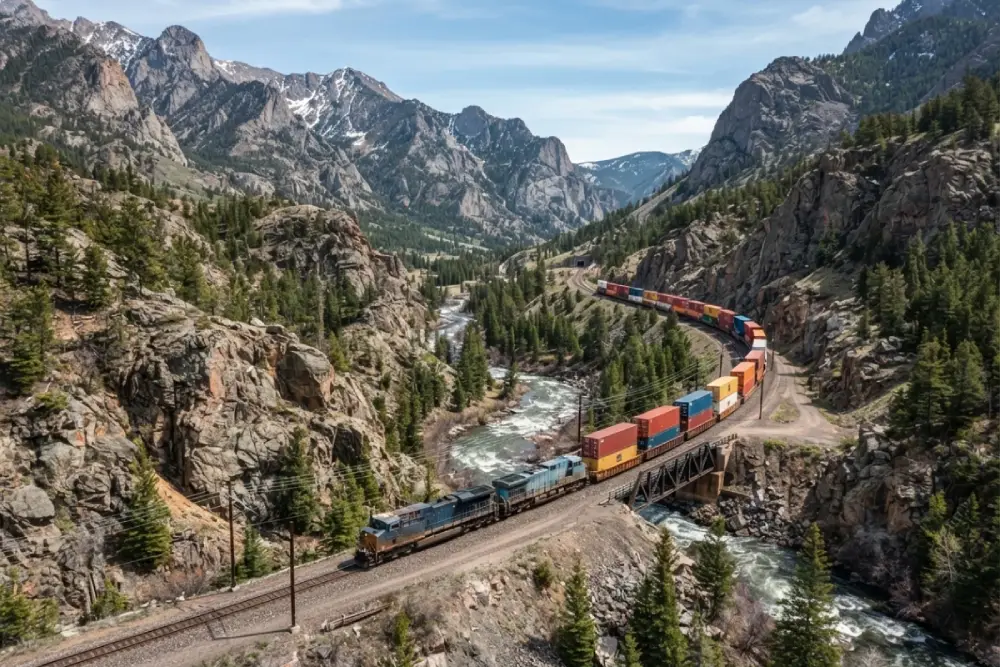
Uzbekistan, Tajikistan, Kyrgyzstan and Turkmenistan have no route to open water. Trucks reach the border, but crossing several frontiers over long distances makes rail transportation the only sensible economic choice.
A standard covered wagon holds roughly 138–161 cubic metres — several trucks’ worth in volume terms. For exporters of steel, minerals, petrochemicals and packaged goods, that economy of scale decides whether the deal is profitable. In volume terms, one railcar easily replaces up to three trucks .
More importantly, until this year Iranian wagons were barred from CIS territory, forcing exporters onto foreign fleets priced in hard currency. A trilateral agreement between Iran, Turkmenistan and Uzbekistan has opened the route for Iranian rolling stock, which has noticeably improved the Iranian exporter’s bargaining position when sourcing a fleet.
Which rolling stock fits which cargo
Picking the wrong wagon does not show up at loading. It shows up as damaged cargo or a delayed discharge.
| Wagon Type | Suitable Cargo | Advantage | Limitation |
|---|---|---|---|
| Covered wagon | Packaged goods, foodstuffs, bagged cement | Protects against rain and humidity | Needs careful internal securing |
| Open-top wagon | Bulk minerals, stone, steel, scrap | Easy loading with loader or crane | Cargo exposed to weather |
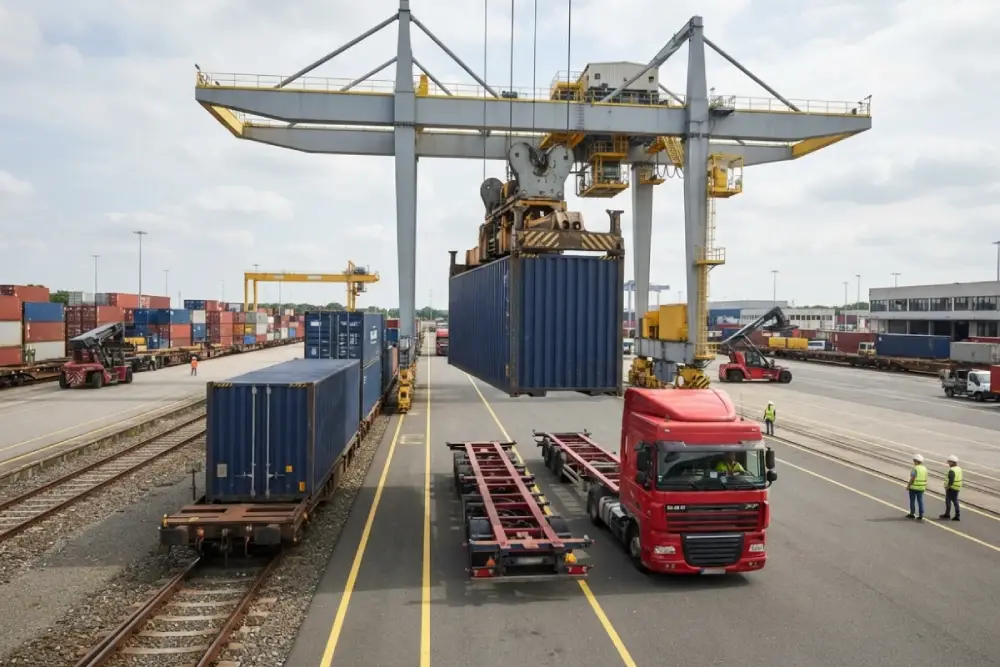
| Flat wagon | 20ft/40ft containers, machinery, pipe | Flexible for mixed and containerised loads | Needs load-securing gear |
| Tank wagon | Bulk liquids, oils, chemicals | No intermediate packaging | Safety rules and special permits |
For food and humidity-sensitive cargo, the covered railcar is the default. For steel and minerals, open-top wagons offer the lower landed cost. And for export containers, flat wagons pair well with onward rail transportation.
The main route: Sarakhs
Freight trains load at a domestic station, undergo bogie exchange at Sarakhs (gauge change from 1435 to 1520 mm), and continue through Turkmenistan to Uzbekistan and beyond. Under the new agreement, Iran supplies the required bogies while the Turkmen and Uzbek sides are exempt from usage fees — a clause that directly lowers the final cost.
The alternative is Incheh Borun in the northeast, used for exports to Kazakhstan and Russia, with capacity being expanded.
One practical point: bogie exchange at Sarakhs can take anywhere from a few hours to more than a day, depending on border traffic. Treat it as an independent variable in delivery planning, not a fixed buffer.

Documents that stop a wagon at the border if incomplete
Rail waybill (SMGS or CIM): the primary carriage document defining the carrier’s liability; one waybill per wagon.
Wagon lease agreement: wagon type, nominal capacity, origin and destination stations, freight rate and termination terms.
Certificate of origin: for preferential tariffs at destination.
Commercial invoice and packing list: weights and quantities must match the waybill.
Special permits where needed: for dangerous goods, bulk liquids or out-of-gauge cargo.
If you work with a customs broker, have documents checked before booking the railcar. Experience shows most border stoppages come from document gaps, not rail capacity shortages.
Three costs that never appear in the first quote
First, dead freight. Rental is calculated on nominal wagon capacity, not actual cargo weight. If your shipment is lighter, you still pay for the empty space. The fix: match tonnage to capacity before booking. For light cargo, a smaller railcar or permissible co-loading is cheaper.
Second, demurrage. If discharge at destination runs past the agreed free time, daily demurrage is added. This risk is sharper at Central Asian destinations with limited discharge capacity. Agree free time with the consignee and cap demurrage in the lease.
Third, wagon–cargo mismatch. A covered wagon loaded with heavy bulk risks structural damage and may be rejected at the destination station for abnormal weight distribution. Confirm technical compatibility before booking.
How to pick a logistics partner
Wagon rental does not happen in a vacuum. You need a partner with direct fleet access, border-route knowledge, and the ability to resolve problems on the ground in Turkmenistan or Uzbekistan.
Apadana Freight Logistics builds its end-to-end supply chain solutions on access to a diversified fleet and a network of local partners in destination countries. Through complete logistics performance management from loading origin to destination station, the company coordinates bogie exchange, clearance and real-time wagon tracking. For bulk liquid shipments, its bulk liquid transport team offers ISO tank and flexitank alternatives.
Before booking, get rate quotes across several routes. Wagon rental rates are not fixed — they move with seasonal supply and demand, wagon type and route. Early quotes let you compare and choose better. Spot shipment pricing, for instance, adjusts to market conditions rather than locking you into a long-term lease .
Frequently asked questions
Are Iranian wagons allowed to operate in Central Asia?
Yes. Under the trilateral Iran–Turkmenistan–Uzbekistan agreement signed this year, Iranian wagons meeting defined technical specifications (covered, tank, grain and container wagons) may transit both countries. Previously, exporters had to rely on foreign rolling stock.
How long does rail freight from Iran to Uzbekistan take?
Depending on the domestic origin, transit to Sarakhs and onward to the destination station in Uzbekistan typically takes 7–12 days. That range includes bogie exchange at Sarakhs and border stops. For precise scheduling, ask your forwarder for a transit-time quote.
What is the difference between a covered and an open-top wagon?
A covered wagon has full walls and a roof, suited to humidity-sensitive cargo. An open-top wagon has no roof and is designed for bulk loading by loader or crane. The wrong choice can damage cargo or cause problems at the destination station.
Can I rent part of a wagon for a small shipment?
Generally no. Rental is priced on full nominal capacity. For shipments below capacity, look at cargo management through consolidation with other loads, or combined transit service (rail–road) solutions.