




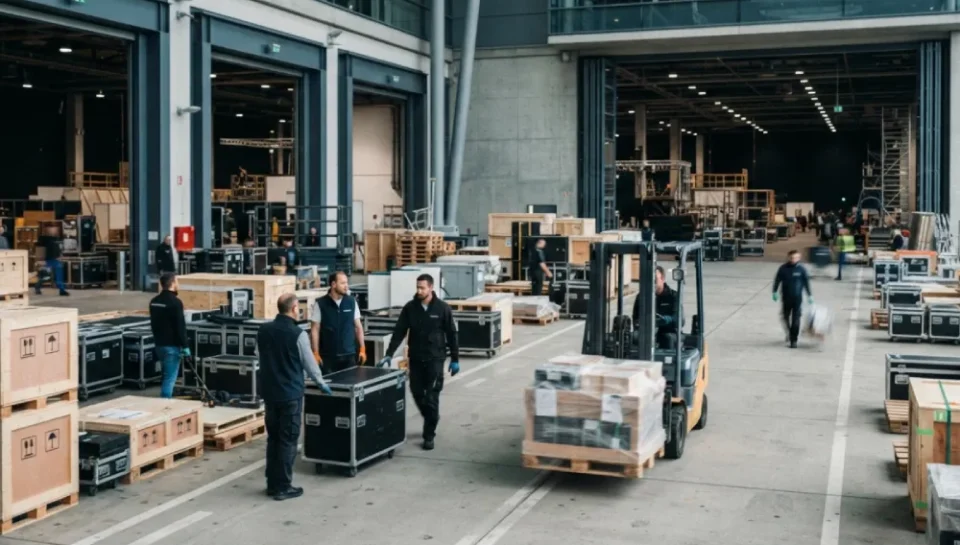
Participating in global trade shows is one of the most significant launching pads for businesses dreaming of conquering cross-border markets. However, behind the scenes of glamorous booths and successful negotiations, a complex and vital mechanism is at work that determines your success or failure. This hidden mechanism is none other than Exhibition logistics. If your equipment, brochures, and product samples do not arrive on time and intact, all your investments and planning will be in vain. In this article, we take an analytical and practical look at the various dimensions of this process to pave the way for your powerful presence in the global arena.
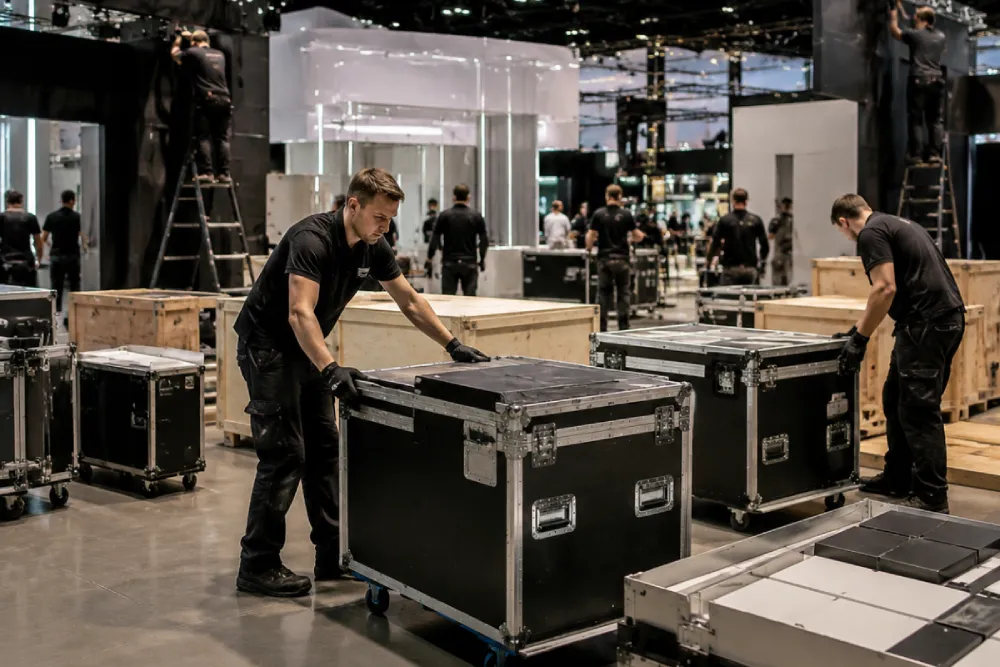
What is Exhibition Logistics and Why is it Crucial?
In its simplest definition, Exhibition logistics refers to the entire process of planning, executing, and controlling the flow of goods, booth equipment, and products from your company’s origin to the exhibition hall in a foreign country, and subsequently returning them. This process is not just a simple transfer; it requires miniature precision in timing, mastery of the customs regulations of different countries, and flawless coordination with the event’s calendar.
The critical importance of Exhibition logistics lies in the fact that time does not stop at international events. The exhibition opens on the scheduled date, and if your cargo is held up at the border due to incomplete customs documents or a poor choice of shipping method, you will lose the golden opportunity to face international clients. An efficient logistics system reduces executives’ stress, allowing them to focus all their energy on marketing and sales.
Key Stages of Successful Event Logistics
To have a worry-free presence at a foreign event, you must manage the process of transferring your equipment through several key stages under strict supervision.
Strategic Planning and Timelines
The first step in Exhibition logistics is establishing a reverse execution calendar. You must work backward from the exhibition’s opening date and calculate the time required for customs clearance, transit time, and packing. In international transportation, you should always build in a safety margin for unforeseen delays, such as severe weather conditions or labor strikes at ports.
Safe and Standardized Packaging
Exhibition goods are usually loaded and unloaded multiple times. Therefore, their packaging must be resistant to impact, moisture, and temperature changes. Using standard wooden crates (fumigated pallets) and precise labeling (including company name, booth number, hall, and destination country) are mandatory for professional Exhibition logistics.
Customs Clearance and Documentation
Perhaps the most complex part of the job is passing through customs barriers. Preparing valid documents such as an ATA Carnet, which acts as a passport for goods, allows you to temporarily import your cargo into the destination country without paying customs duties. Mastering these documents requires the expertise of a specialized team.
Choosing the Right Transportation Method
The choice of shipping method directly impacts your costs and schedule. Depending on the type of goods, budget, and remaining time, you can choose one of the following methods:
Speed with Air Freight
If there is little time left before the event starts, or if your equipment is highly sensitive and expensive, air freight is the best option. Although this method costs more, the speed of delivery reduces the risk of late arrival in Exhibition logistics to absolute zero.
Cost-Effectiveness of sea transportation
For transferring heavy equipment, large machinery, and massive booth structures, you must definitely look into sea transportation. This method is highly economical but requires early planning, as shipping goods across oceans can take weeks.
Flexibility of land transportation
If the exhibition is held in a neighboring country or within a contiguous continent (like Europe), land transportation using transit trucks is an ideal choice. This method offers high flexibility, and goods can be transported directly from your warehouse to the doors of the exhibition hall (Door to Door).
Capacity and Safety of rail transportation
For long overland routes, rail transportation serves as an excellent middle ground between speed and cost. Freight trains have a massive capacity for moving huge volumes of equipment, and they offer far greater safety against road accidents. This method is highly intelligent for destinations connected to international rail networks.
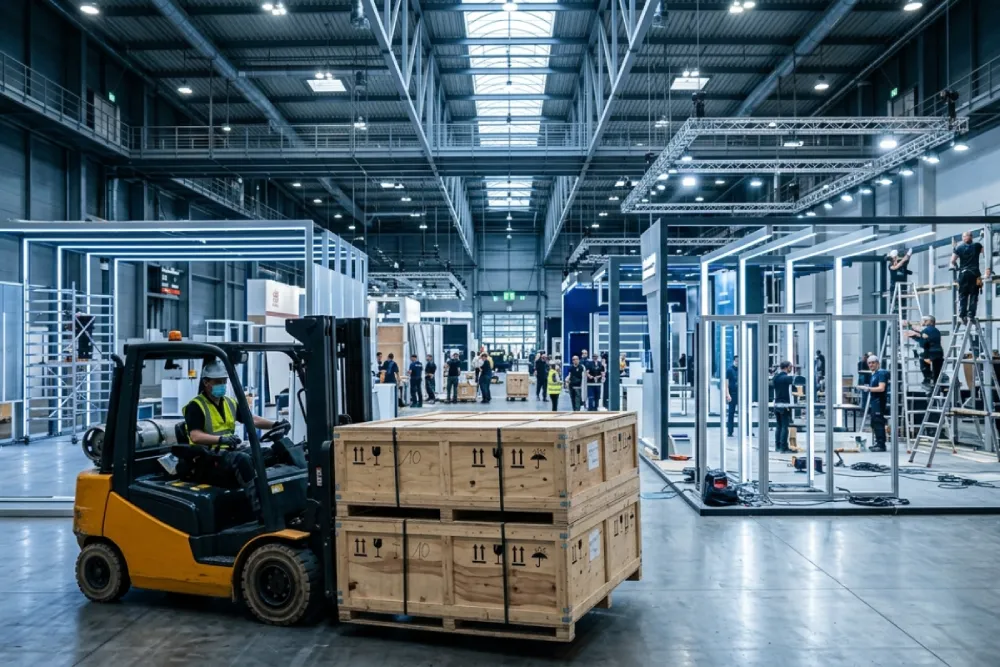
How Apadana transportation company Ensures Your Success
Managing all these complexities is certainly beyond the capabilities of a marketing team. This is where the presence of a powerful logistics partner becomes meaningful. Apadana transportation company, with years of brilliant experience in the field of international transportation, acts as your executive arm in global events.
The specialized team at Apadana transportation company stands by your side, providing A-to-Z Exhibition logistics services—from consulting on the best shipping method (whether it is land transportation, air freight, sea transportation, or rail transportation) to packaging, customs affairs, and exact delivery at the booth. At Apadana transportation company, we know that your cargo is not just a collection of goods; it is the reputation and future of your business. Therefore, we protect this reputation with the highest level of commitment.
Common Exhibition Logistics Mistakes to Avoid
In the world of Exhibition logistics, a small error can lead to a massive disaster. Some of the most common mistakes include:
Delaying the planning process and leaving tasks to the final days.
Lack of familiarity with the temporary import regulations of the host country.
Poor packaging leading to damaged display items.
Failing to insure the cargo with full-risk coverage.
Choosing non-specialized intermediary brokers instead of reputable international transportation companies.
To avoid these pitfalls, always rely on the experience and expertise of renowned companies like Apadana transportation company, so you can have peace of mind and solely focus on shining at the exhibition.
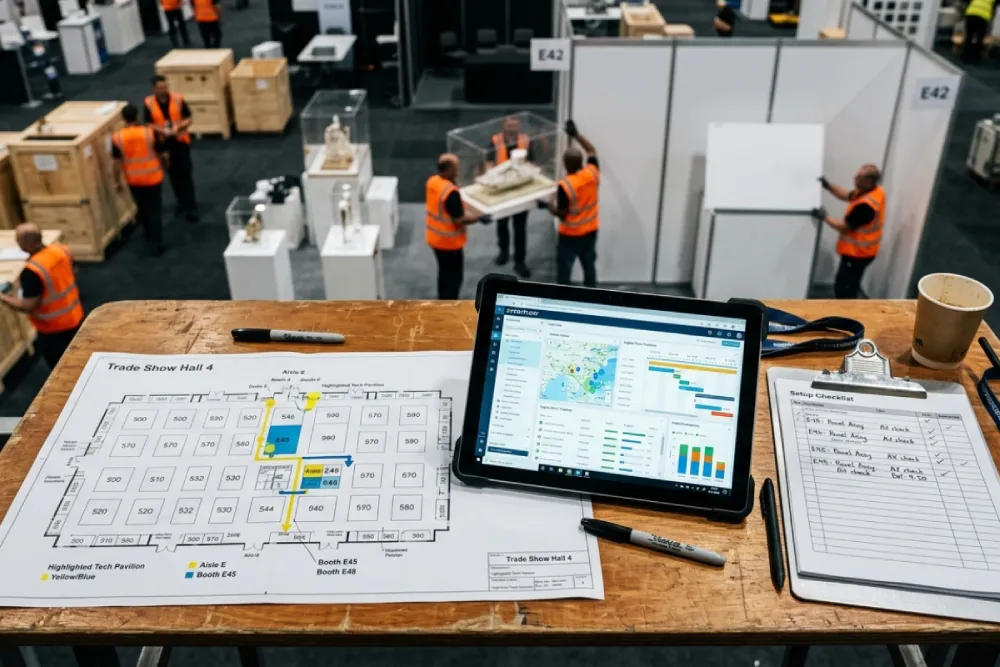
Frequently Asked Questions
What is an ATA Carnet and how is it used in exhibitions?
An ATA Carnet is an international customs document that acts like a passport for goods. Using this document, you can temporarily import your exhibition equipment into member countries without paying customs duties and taxes, and return them to the country of origin after the event concludes.
When is the best time to start the Exhibition logistics process?
The best time depends on the destination and the transportation method. Generally, for distant destinations requiring sea transportation, it is recommended to start at least 3 to 4 months before the event. For closer routes utilizing land transportation or air freight, at least 1 to 2 months in advance is advisable.
Does Apadana transportation company offer warehousing services in the destination country?
Yes, by having an extensive network of agents worldwide, Apadana transportation company provides secure warehousing for your shipments both before the exhibition starts and after it concludes in the destination country, ensuring all coordination is handled perfectly.
What happens if our goods are damaged during transit?
In a standard Exhibition logistics process, all goods are covered by valid international insurance policies before departure. In the event of any damage, the transportation company will submit the necessary documents to the insurance provider to fully compensate for the losses incurred.
Can a combination of transportation methods be used to ship goods?
Yes, in many large-scale international transportation projects, multimodal transport is utilized. For example, goods may first be moved via rail transportation to a port, and then shipped across the ocean to the destination country to optimize both costs and time.