
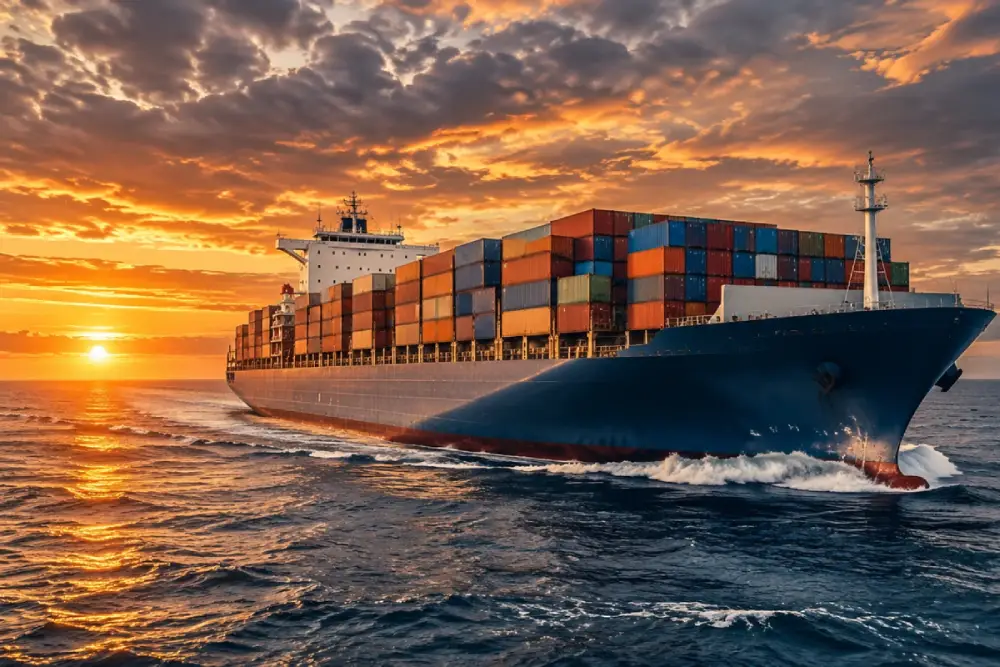
Moving bulk inventory, industrial machinery, or retail commodities across borders inevitably leads to one dominant supply chain calculation: what is the actual cost of shipping cargo by ship? Across modern international commerce, maritime transport remains the cornerstone of global trade, carrying well over 80% of all internationally traded goods.
While ocean freight is fundamentally the most economical method for moving large freight volumes, reading an ocean freight quote can feel like deciphering an ambiguous balance sheet. Between fluctuating bunker adjustments, terminal tariffs, and complex container volume ratios, predicting your exact landed costs demands practical operational clarity.
This comprehensive guide breaks down how ocean rates are built, demystifies volumetric calculations, compares full versus partial container deployments, and provides actionable tactics to eliminate avoidable port charges.
How Is Ocean Freight Calculated? Weight vs. Measurement (W/M)
Ocean shipping lines calculate basic freight rates using a clear volume-to-weight mechanism: the Revenue Ton (RT), commonly structured on a Weight or Measurement (W/M) convention.
Vessels operate under dual physical limitations: displacement capacity (deadweight tonnage) and cargo hold cubic volume. To optimize revenue regardless of whether a ship is loaded with heavy structural steel or lightweight retail packaging, shipping lines apply this standard formula:
- 1 Metric Ton (1,000 kg) = 1 Cubic Meter (CBM)
For Less than Container Load (LCL) shipments, forwarders calculate both the total metric tonnage and total volume in CBM. The billable charge aligns with whichever metric yields the higher figure:
- If you move 5 CBM of industrial filters weighing 2,000 kg (2 tons), the freight is billed at 5 Revenue Tons.
- Conversely, if you move dense stone slabs measuring 2 CBM but weighing 4,500 kg (4.5 tons), you pay for 4.5 Revenue Tons.
For Full Container Loads (FCL), the pricing structure shifts from per-CBM pricing to flat-rate container box pricing, varying according to container specifications (e.g., 20ft standard, 40ft standard, or 40ft High Cube).
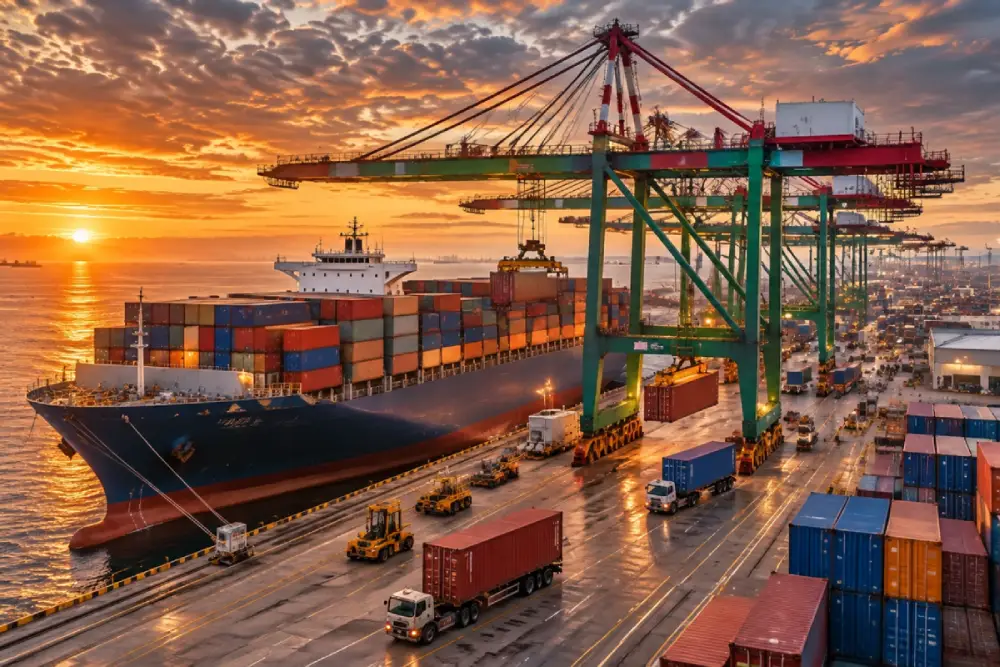
Major Cost Drivers in Maritime Shipping
Ocean freight pricing fluctuates continuously in response to macroeconomic shifts, global vessel availability, and destination realities. Several major factors define the primary base rate:
1. Route Complexity and Port Logistics
Direct point-to-point transit between Tier-1 global hubs (such as Shanghai, Rotterdam, Singapore, or Jebel Ali) naturally features the lowest per-mile costs due to scale economies and intense carrier competition. Routes involving feeder vessels, canal transits (Suez or Panama), or congested secondary terminals introduce surcharge surcharges and transshipment handling fees.
2. Commodity Classification and Hazard Levels
Standard dry, non-perishable commercial freight incurs regular standard cargo tariffs. However, specialized cargo classes shift the baseline:
- Dangerous Goods (DG): Regulated hazardous chemicals, lithium-ion components, and pressurized cargo demand IMO certification, distinct vessel placement, and certified manifests, yielding elevated rate multipliers.
- Temperature-Controlled Shipments: Reefer units require steady power feeds, continuous telematics monitoring, and pre-trip inspections, costing considerably more than standard dry vans.
3. Energy Fluctuations (Bunker Adjustment Factor – BAF)
Bunker fuels represent one of the largest single operating costs for commercial shipping lines. To insulate carriers from crude market volatility, forwarders apply a dynamic BAF index, adjusting surcharges monthly or quarterly.
4. Market Seasonality and Peak Surcharges (PSS)
Ocean capacity operates on tight margins. During peak import windows—such as pre-holiday retail surges or the weeks preceding the East Asian Lunar New Year factory closures—vessel space tightens drastically. Carriers routinely introduce Peak Season Surcharges (PSS) and Emergency Bunker Adjustments to balance demand bottlenecks.
FCL vs. LCL: Deciding Which Model Protects Your Margins
Choosing the proper consolidation framework represents one of the simplest levers to control the overall cost of shipping cargo by ship.
Full Container Load (FCL)
With FCL, you lease the entire payload space of a 20-foot (approx. 33 CBM capacity) or 40-foot (approx. 67 CBM capacity) container. You do not share the envelope with other shippers, and cargo remains sealed from loading origin to destination de-stuffing. FCL features lower relative administrative overhead, faster clearing timelines, and reduced risk of cargo handling damage.
Less than Container Load (LCL)
LCL enables smaller businesses to share container space. A cargo consolidator groups your pallets with goods from other merchants bound for the same general port of discharge. While highly economical for modest consignments (1 to 12 CBM), LCL involves additional handling costs, including CFS (Container Freight Station) de-consolidation fees.
The Inflection Threshold: Once your shipment volume approaches 13 to 15 CBM, booking a full 20ft container (FCL) is almost universally cheaper than paying cumulative per-CBM LCL fees, even if the container sails partially empty.

Overlooked Surcharges: Beyond the Ocean Base Rate
A common procurement pitfall is evaluating ocean quotes exclusively by the base ocean freight figure. Landed destination outlays often comprise a substantial percentage of the real balance:
- Terminal Handling Charges (THC): Charged by origin and destination port authorities for offloading boxes from vessels and repositioning them across marshaling yards.
- Documentation & Bill of Lading (B/L) Fees: Administrative processing tariffs levied by carriers for generating and verifying transport titles.
- Demurrage and Detention: If customs holds, documentation delays, or warehouse gridlock prevent you from retrieving the container or returning the empty box within contracted “free days,” carriers charge steep per-day penalty fees.
- Customs Clearance, Duties, and Bonded Storage: Tariffs, localized VAT, import inspection costs, and staging fees outside carrier control.
Evaluating Incoterms: Who Pays What?
Incoterms establish precise contractual custody points between foreign suppliers and purchasing entities:
- FOB (Free on Board): The supplier absorbs all inland movement, packing, and port terminal loading charges in their country. The buyer assumes complete control over the ocean carrier selection, ocean freight tariffs, destination offloading, and local clearance.
- CIF (Cost, Insurance, and Freight): The seller finances ocean transport and basic maritime insurance to the entry harbor. However, the buyer remains responsible for arrival terminal fees, local import declarations, and ongoing inland transit.
- EXW (Ex Works): The buyer assumes 100% of the logistical financial exposure, starting directly at the seller’s factory gate.
Sourcing goods under FOB typically provides businesses with better control over transport partners and prevents inflated, untracked destination surcharges often hidden in supplier-arranged CIF agreements.
Combining Freight Modes for Cost-Effective Transit
True logistics efficiency rarely starts or stops at the water’s edge. Once offloaded at deepwater quays, maritime consignments require continuous overland routing to reach inland industrial centers, distribution networks, or regional fulfillment hubs.
When managing high-volume supply chains, balancing ocean freight operations with structured road transport links guarantees continuous, cost-controlled distribution. Instead of relying on expensive emergency air alternatives when bottlenecks emerge, an agile international transport company can engineer integrated multimodal movements—transferring sea containers efficiently onto cross-dock trucks or regional rail shuttles.
In this logistics landscape, Apadana Transport Company delivers comprehensive international multi-modal solutions. Backed by established freight networks, strategic port positioning, and synchronized inland haulage, the team provides commercial shippers with dependable ocean routing, streamlined customs documentation, and seamless door-to-door delivery.
Proven Strategies to Lower Your Ocean Freight Spend
- Optimize Packaging Density: Eliminate unutilized void space inside primary and secondary packaging. Engineering carton dimensions to maximize standard Euro- or ISO-pallet layouts translates directly into higher piece densities per CBM.
- Negotiate Extended Free Days: Always request 14 to 21 combined detention and demurrage days directly into your forwarder contracts before vessel departure. This simple buffer protects against unexpected port clearance delays.
- Book Well Ahead of Spot Market Volatility: Secure carrier allocations at least three weeks before production handoffs to lock in balanced contract rates and avoid spot market escalation.
- Audit Quotations for Transparent Inclusions: Demand itemized quotes detailing all THC origin/destination breakdowns, bunker factors, and security additions to avoid unexpected arrival surcharges.
Frequently Asked Questions
What is the minimum volume required to ship by sea?
Ocean lines typically accept LCL shipments starting from 1 CBM or 1,000 kg. While you can send cargo smaller than 1 CBM, forwarders apply a standard 1-CBM baseline charge for minimum operational handling.
How long does cargo transit by ship usually take?
Transit durations depend on geographical separation, vessel routing, and intermediate canal passages. Direct deepwater passages between East Asia and Middle Eastern hubs take roughly 15 to 22 days, while transit from Asia to Northern European main ports spans approximately 28 to 40 days, excluding customs processing.
Why is sea freight so much cheaper than air freight?
Economy of scale. Ultra-large container vessels transport upwards of 20,000 TEUs on a single voyage with efficient fuel consumption per metric ton. Cargo planes face strict weight, balance, and high fuel burn limitations, making air freight roughly 4 to 8 times more expensive on average.
What is the difference between Demurrage and Detention?
Demurrage applies to full containers remaining inside the port terminal yard beyond allowed free days. Detention applies when a merchant moves the box outside the port for unloading but fails to return the empty container to the carrier’s equipment depot within the contracted window.