When eight thousand trucks sit idle at the Merchant crossing, the “base rate” on your quotation becomes a footnote. What actually determines your landed cost is the combination of the transit trailer rate, daily demurrage, and the customs penalties that never made it into the contract. Road transport logistics in 2026 is no longer a line item you can budget from a single email. It is a moving target shaped by ton-kilometer indices, currency volatility, and border capacity—and shippers who treat it otherwise pay for the gap.
Why Transit Trailer Rates Have Become a Moving Target
The Iranian domestic road freight benchmark—the ton-kilometer index—was raised from 13,190 rials to 16,680 rials in mid-2026, a 26.5% adjustment that recalibrates every domestic haulage calculation . That figure covers domestic legs. For international transit, it is only the starting point. Currency exposure, fuel prices across Turkey and Eastern Europe, and toll increases compound the base rate before your cargo even reaches the border.
In Europe, the picture is equally tight. The Transporeon Capacity Index fell to 90.4 points by January 2026, a 5.5% year-on-year decline, signaling a severe shortage of available trucks . Spot rates rose 4.3% year-on-year, and contract rates followed at 4.1% . Austria, Belgium, the Czech Republic, France, and Poland all implemented toll increases in early 2026, with some vehicle classes seeing double-digit percentage jumps . For a shipper moving goods from Turkey into Europe or through Iran to Central Asia, these European cost pressures ripple through the entire corridor.
Trailer Types and Their Direct Impact on Your Rate
The trailer you choose is not a cosmetic decision. It directly determines the road transport logistics cost structure.
Curtain-side transit trailers are the workhorse for general cargo, industrial goods, and palletized shipments. They offer the most competitive per-truck rate because they require no specialized equipment and can be loaded from the side. For steel, auto parts, or polymer products, this is usually the economically rational choice.
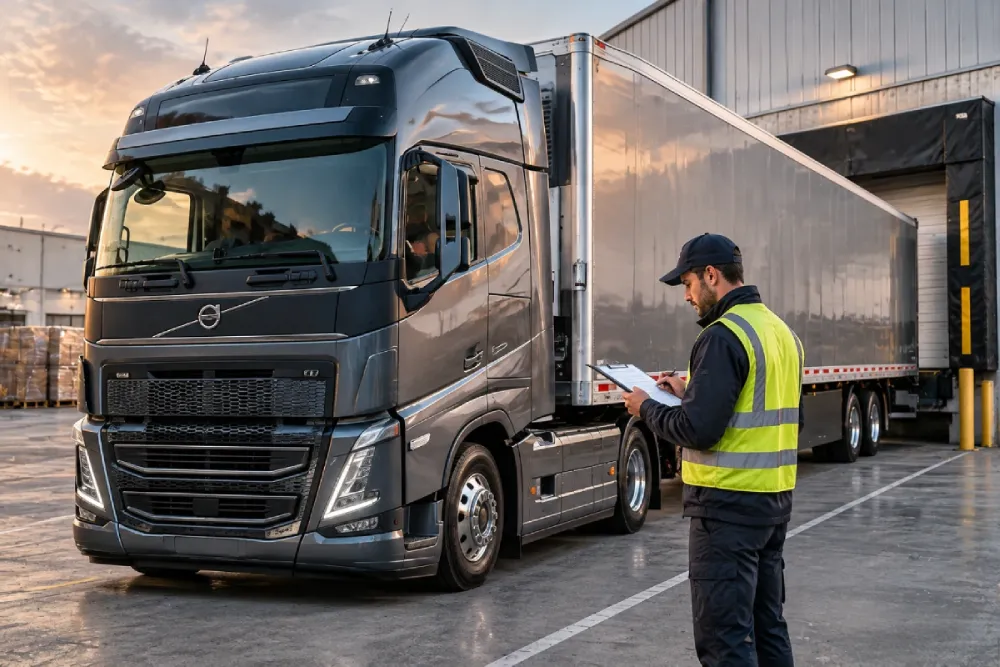
Refrigerated transit trailers are mandatory for food, pharmaceuticals, and temperature-sensitive cargo. The refrigeration unit burns fuel continuously, and the equipment carries higher maintenance and depreciation costs. In practice, a reefer trailer on the same lane commands a 15–25% premium over a curtain-side trailer. For transit trailer rental pricing, this differential must be built into the landed cost calculation from the outset, not discovered at the quotation stage.
Flatbed and low-bed trailers serve project cargo, over-dimensional loads, and shipments requiring crane loading. Pricing for these movements is not ton-kilometer based; it reflects operational complexity, escort requirements, and the opportunity cost of tying up specialized equipment for extended periods.
The Hidden Costs That Never Appear on the Rate Confirmation
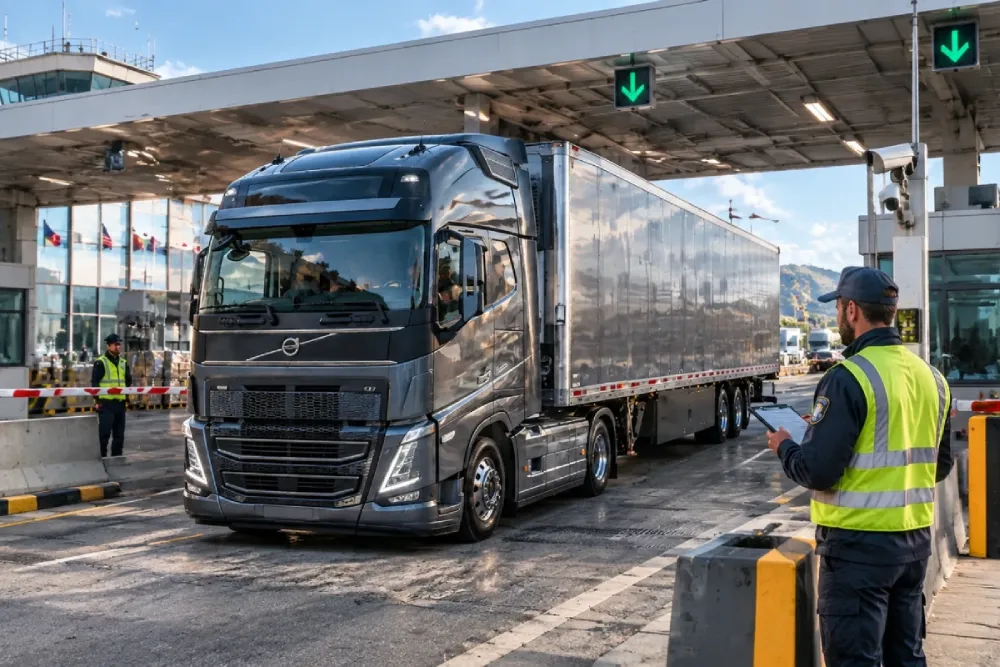
The most expensive mistake in road transport logistics is treating the quoted trailer rate as the total cost.Border demurrage is the first hidden layer. With roughly 8,000 trucks stalled at Bazargan and drivers reporting 20–25 day waits at Rimdan, the daily cost of an idle truck is estimated at $175 . A 20-day stop translates to $3,500 in demurrage alone—independent of the freight rate. For a shipper who budgeted only the trailer rate, this is an unbudgeted loss.
Currency exposure is the second. A significant share of transit costs, port demurrage, and container detention is settled in regional currencies. With the dollar crossing 213,000 tomans, importers face sharply higher foreign-currency costs and longer cargo dwell times at customs . A rate quoted two months ago is no longer valid today.
The third layer is documentation failure. A missing CMR consignment note, an expired veterinary certificate, or an incorrect TIR carnet can halt a truck at the border for days. The cost is not the document itself—it is the idle trailer, the missed delivery window, and the contractual penalty that follows.
Comparative Table: Transit Trailer Rates on Key Corridors
| Route | Trailer Type | Indicative Rate (USD) | Transit Time (approx.) | Notes |
|---|---|---|---|---|
| Istanbul – Tehran | Curtain-side | 2,500 – 4,000 | 5 – 8 days | Bazargan queue dependent |
| Ankara – Tehran | Curtain-side | 2,200 – 3,500 | 5 – 7 days | Razi crossing often less congested |
| Izmir – Tehran | Reefer | 2,800 – 4,200+ | 6 – 9 days | Refrigeration unit premium applies |
| Mersin – Tehran | Flatbed / curtain | 2,600 – 4,000 | 6 – 9 days | Suitable for project cargo |
Rates are indicative ranges. Actual pricing depends on cargo specifics, season, and border conditions. For a firm quotation, cargo details and exact origin/destination must be provided.

The North-South Corridor as a Rate Alternative
For cargo moving from southern Iranian ports toward Central Asia or Eastern Europe, the North-South Corridor deserves a place in your rate comparison. Rail transport on this route is reported to be 30–40% cheaper than road haulage, but transit times stretch to 15–25 days and depend on the incomplete Rasht-Astara rail link . For bulk commodities with low time sensitivity—grain, minerals, construction materials—a sea-to-rail combination can undercut a direct trailer rate. For high-value or perishable cargo, the direct reefer trailer remains the rational choice despite the higher headline rate.
APADANA FREIGHT operates across the western and southern border gateways, giving shippers access to comparative rate structures between road, rail, and multimodal options. For liquid bulk movements, BULK LIQUID TRANSPORT via ISO tanks or flexitanks can reduce per-ton costs relative to standard trailers while maintaining TRANSIT SERVICE standards for safety and documentation. CARGO MANAGEMENT across these modes requires a forwarder who can model total landed cost, not just the line-haul rate.
Pre-Quotation Checklist: What to Prepare Before Requesting a Rate
Before requesting a road transport logistics quotation, have the following ready. Without them, any rate you receive is provisional at best.
Cargo description and exact weight: Is it stackable? What is the per-pallet weight and dimensions?
Precise origin and destination: City, not just country.
Temperature requirements: Does the cargo require a reefer? What is the acceptable temperature range?
Customs documentation: Commercial invoice, packing list, certificate of origin, and any pre-clearance approvals.
Special certifications: Veterinary certificates for food, health ministry approval for pharmaceuticals, ISO or safety certificates for industrial goods.
Cargo insurance status: Do you have all-risk coverage from origin to destination, or does the forwarder need to arrange it?
LOGISTICS PERFORMANCE MANAGEMENT begins with accurate input data. A quotation built on incomplete cargo information will either be revised upward or result in the wrong equipment at the loading dock.
Final Perspective: Treat the Trailer Rate as a Strategic Decision
The transit trailer rate is not just a number on a proforma invoice. It is a reflection of the risks embedded in your supply chain. In a market where border queues, currency movements, and fleet availability change weekly, the forwarder who can compare multimodal options and surface demurrage exposure before booking is worth more than the one who quotes the lowest spot rate. APADANA FREIGHT maintains access to curtain-side, reefer, and flatbed equipment at the main border crossings and can structure end-to-end supply chain solutions that combine road, rail, and sea legs. The objective is not the cheapest trailer on the day of booking—it is the cargo that arrives without a demurrage invoice you did not see coming.
Frequently Asked Questions
How much does a transit trailer from Turkey to Iran cost in 2026?
Indicative ranges for a curtain-side trailer from Istanbul to Tehran are $2,500–$4,000, while a reefer from Izmir to Tehran starts at $2,800 and can exceed $4,200 depending on cargo and season. These figures exclude demurrage, customs fees, and insurance, and must be confirmed for each specific shipment .
Is border waiting time included in the trailer rate?
No. The trailer rate covers transport from origin to destination only. Border demurrage—currently estimated at $175 per truck per day—is charged separately and should be explicitly addressed in the forwarding contract . With 20–25 day waits reported at some crossings, this can add $3,500 or more to the total cost.
What is the rate difference between curtain-side and reefer trailers?
On comparable lanes, a reefer trailer typically commands a 15–25% premium over a curtain-side trailer. The differential reflects fuel consumption by the refrigeration unit, higher equipment maintenance costs, and reduced availability of reefer fleets during peak seasons.
Can rail replace road for transit cargo in the North-South Corridor?
For bulk cargo with flexible delivery windows, rail on the North-South Corridor is reported to be 30–40% cheaper than road, but transit times are 15–25 days and capacity is constrained by the incomplete Rasht-Astara link . For time-sensitive or high-value cargo, the direct trailer remains the practical choice.
What documents are required for a transit trailer shipment?
At minimum: CMR consignment note, TIR carnet (where applicable), commercial invoice, packing list, certificate of origin, and any cargo-specific certificates (veterinary, health, or ISO). Missing or incorrect documentation is a leading cause of border delays and demurrage costs.