

Temperature deviations, customs delays and inadequate cargo handling can create significant risks when transporting perishable goods across international borders. Even a short interruption in the cold chain may affect product quality, reduce shelf life or result in financial losses. For exporters, importers and supply chain managers, selecting the right transport equipment and coordinating every stage of the shipment are essential to protecting cargo integrity.
Refrigerated trailer transport is widely used for moving temperature-sensitive products over domestic and international road networks. Equipped with dedicated refrigeration systems and insulated cargo compartments, these trailers help maintain controlled conditions throughout transit.
However, successful refrigerated transportation involves more than keeping a trailer cold. Cargo preparation, temperature requirements, loading procedures, route planning, customs clearance and shipment monitoring all influence the outcome.
This guide examines how refrigerated trailers operate, what affects transport costs, which documents are required and how businesses can manage the risks associated with shipping perishable goods.
What Is a Refrigerated Trailer?
A Refrigerated Trailer, also known as a Reefer Trailer or refrigerated semi-trailer, is a road freight unit designed to transport goods that require controlled temperature conditions.
Unlike a standard dry freight trailer, a refrigerated unit incorporates an insulated cargo compartment and a mechanical refrigeration system. These components work together to maintain the temperature range specified for the shipment.
Refrigerated trailers are commonly used for transporting fresh produce, meat, dairy products, frozen food, pharmaceuticals and selected industrial materials.
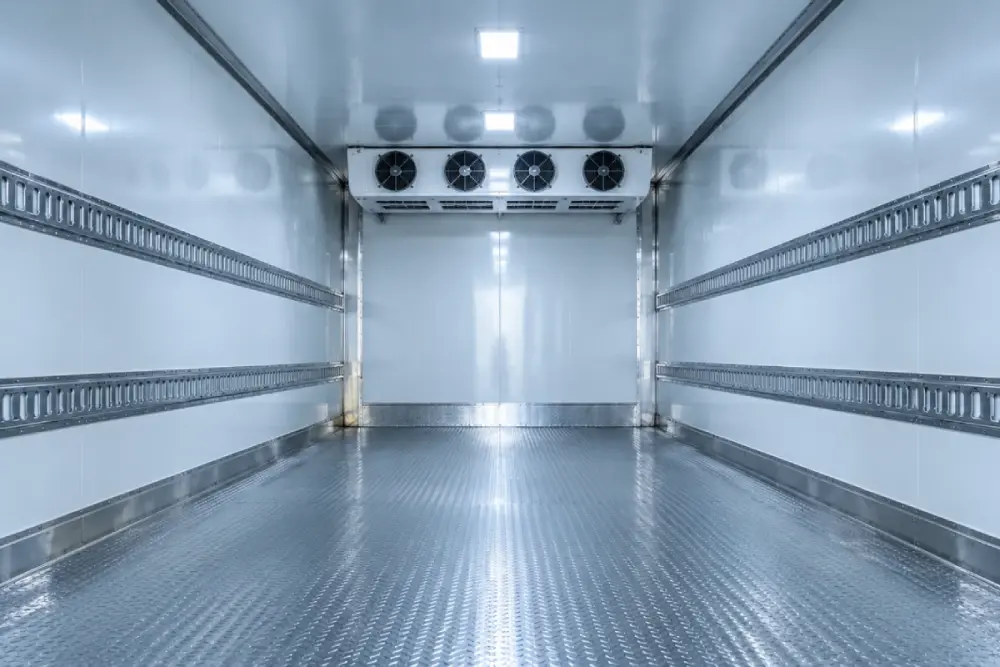
Main Components of a Refrigerated Trailer
A typical reefer trailer consists of several integrated systems:
Refrigeration Unit: Generates and regulates the required cooling conditions inside the cargo compartment.
Thermal Insulation: Reduces heat transfer between the external environment and the cargo space.
Air Circulation System: Distributes conditioned air throughout the trailer to maintain more consistent temperatures.
Temperature Sensors: Monitor internal conditions and identify potential deviations.
Temperature Data Logger: Records temperature readings for shipment monitoring and verification.
Control System: Allows operators to configure and monitor the refrigeration unit.
The performance of these components depends on correct loading practices, equipment maintenance and appropriate operating procedures.
A refrigeration unit alone cannot guarantee cargo safety if airflow is restricted or products are loaded at unsuitable temperatures.
What Types of Goods Require Refrigerated Trailer Transport?
Different commodities have different temperature requirements. Selecting the right equipment therefore starts with understanding the product’s characteristics, storage conditions and permitted temperature range.
1. Fresh Food and Agricultural Products
Fresh fruit, vegetables, meat, poultry, seafood and dairy products are among the most common commodities transported using refrigerated trailers.
These products are sensitive to temperature fluctuations, humidity and extended transit times.
For example, certain fruits require temperatures close to freezing, while other products may suffer chilling injury if exposed to excessively low temperatures.
Cargo-specific handling instructions must therefore be established before loading.
2. Frozen Food Products
Frozen meat, processed food, frozen vegetables and other temperature-sensitive products require stable low-temperature conditions throughout transportation.
The refrigeration system must be suitable for the required operating range, while loading procedures should prevent warm air from entering the compartment unnecessarily.
Maintaining an uninterrupted cold chain is particularly important for long-distance shipments.
3. Pharmaceuticals and Temperature-Sensitive Medical Products
Certain medicines, vaccines, biological materials and pharmaceutical ingredients require carefully controlled transportation conditions.
Depending on the product, standard refrigerated trailers may not provide sufficient control. Dedicated temperature-controlled equipment, continuous monitoring and documented handling procedures may be necessary.
Pharmaceutical shipments should follow the manufacturer’s specifications and applicable Good Distribution Practice (GDP) requirements.
4. Temperature-Sensitive Industrial Materials
Certain chemicals, adhesives, coatings and industrial raw materials may also require controlled transportation conditions.
Before arranging transport, logistics teams should review the product’s technical specifications, Safety Data Sheet (SDS) and any applicable handling restrictions.
Types of Refrigerated Trailers and Their Applications
Refrigerated trailers are available in different configurations depending on the cargo and operating requirements.
| Trailer Type | Main Characteristics | Typical Applications |
|---|---|---|
| Standard Refrigerated Trailer | Controlled internal temperature | Fresh food and agricultural products |
| Frozen Transport Trailer | Designed for low-temperature transportation | Frozen meat and food products |
| Multi-Temperature Trailer | Separate temperature-controlled compartments | Mixed-temperature shipments |
| Data-Logging Refrigerated Trailer | Equipped with temperature recording systems | Sensitive and high-value cargo |
Multi-Temperature Refrigerated Trailers
A Multi-Temperature Trailer is designed to transport different products requiring separate temperature conditions within the same vehicle.
For example, a shipment containing several categories of food may require different temperature settings. A multi-compartment system can help accommodate these requirements.
However, the cargo must be arranged carefully to maintain proper airflow and prevent temperature interference between compartments.
Essential Conditions for Refrigerated Trailer Transport
Maintaining cargo quality requires coordinated procedures before, during and after transportation.
1. Establish the Correct Temperature Range
The required temperature should be determined according to the commodity, manufacturer’s instructions and applicable regulatory requirements.
Fresh meat, frozen products, dairy goods and pharmaceuticals do not necessarily share the same temperature requirements.
A single temperature setting should never be applied indiscriminately to different types of cargo.
2. Pre-Cooling the Cargo Compartment
Before loading, the refrigerated trailer should be brought to the required operating temperature.
This process, known as Pre-Cooling, helps prevent unnecessary temperature increases when cargo is loaded.
It is important to distinguish between pre-cooling the trailer and cooling the actual product. A conventional refrigeration unit is generally intended to maintain cargo temperature rather than rapidly cool products that have not been properly prepared before dispatch.
3. Proper Packaging and Cargo Loading
Packaging must protect products against physical damage and support the required transportation conditions.
Loading procedures should also preserve sufficient space for air circulation.
Blocking ventilation channels or placing cargo too close to the walls may create uneven temperature distribution inside the trailer.
4. Continuous Temperature Monitoring
Temperature monitoring is particularly important during long-distance and cross-border transportation.
Digital monitoring systems and data loggers can provide a record of temperature conditions throughout the journey.
These records may be required for quality assurance, cargo acceptance procedures, insurance claims or commercial dispute resolution.
5. Route Planning and Transit Time Management
Route selection directly affects the reliability and cost of refrigerated transportation.
Border crossings, customs inspections, road restrictions and unexpected delays should be considered before dispatch.
Effective coordination between the shipper, freight forwarder, carrier and customs representatives can reduce unnecessary waiting times.

Refrigerated Trailer Transport Cost: What Determines the Price?
The Refrigerated Trailer Transport Cost depends on several commercial and operational factors. There is no universal rate applicable to every shipment because transportation requirements differ according to cargo type, route, temperature range and service scope.
1. Distance and Transport Route
Longer distances generally increase fuel consumption, vehicle operating expenses and driver-related costs.
International road freight may also involve border charges, transit documentation and additional operational requirements.
2. Cargo Type and Temperature Requirements
Fresh food, frozen products and pharmaceutical materials may require different refrigeration capabilities and monitoring arrangements.
More demanding temperature specifications can increase operating costs.
3. Transit Time and Waiting Periods
Delays at loading facilities, border crossings and customs terminals may increase total transportation expenses.
Waiting time is particularly important for perishable cargo because extended delays can increase the risk of product deterioration.
4. Refrigeration System Operating Expenses
The refrigeration unit requires energy to maintain the specified temperature.
Fuel consumption, equipment efficiency, external weather conditions and maintenance requirements can all influence operating expenses.
5. Trailer Capacity and Equipment Specifications
Trailer dimensions, permitted payload, compartment configuration and monitoring capabilities can affect the final quotation.
6. Additional Logistics Services
The total shipment cost may also include:
Cargo insurance.
Loading and unloading services.
Customs clearance.
Warehousing and temporary storage.
Border and transit charges.
Temperature monitoring and reporting.
Special handling requirements.
Cost Factors at a Glance
| Cost Component | Potential Impact |
|---|---|
| Transport distance | Higher base freight charges |
| Low-temperature requirements | Increased refrigeration expenses |
| Extended waiting time | Additional operational costs |
| Temperature monitoring | Additional service charges |
| Cross-border transit | Customs and transit expenses |
| Cargo insurance | Additional insurance premium |
How to Request an Accurate Refrigerated Transport Quotation
To obtain a reliable quotation, businesses should provide complete shipment information.
A standard freight quotation request should include:
Exact origin and destination.
Commodity description.
Gross weight and cargo volume.
Required temperature range.
Packaging and loading specifications.
Planned dispatch date.
Expected transit time.
Temperature monitoring requirements.
Insurance coverage requirements.
Customs documentation and clearance requirements.
Providing accurate shipment details allows logistics providers to assess the appropriate transport solution and identify potential additional costs before dispatch.
Comparing Refrigerated Road, Rail, Sea and Air Freight
Refrigerated road transportation is not the only option for moving temperature-sensitive goods. Depending on the shipment’s origin, destination, value and delivery requirements, businesses may consider several transport modes.
| Transport Mode | Transit Time | Relative Cost | Typical Applications |
|---|---|---|---|
| Refrigerated Road Freight | Medium, route-dependent | Medium | Regional and international road shipments |
| Refrigerated Rail Freight | Medium to long | Medium | Large-volume cargo on suitable rail networks |
| Reefer Container Sea Freight | Long | Often economical for large volumes | Intercontinental trade |
| Temperature-Controlled Air Freight | Short | High | High-value and time-sensitive products |
Actual transit times and costs depend on route availability, infrastructure, capacity and cargo requirements.
When Is Refrigerated Road Freight the Better Choice?
Road freight offers flexibility for regional and cross-border shipments.
It can support direct collection from production facilities and delivery to distribution centres, warehouses or final customers.
This reduces unnecessary cargo handling and may simplify coordination across the supply chain.
When Should Businesses Consider Reefer Container Shipping?
For large-volume international shipments, a Reefer Container transported by sea may provide a more economical option.
These containers use dedicated refrigeration systems and require appropriate electrical connections during sea transportation and terminal operations.
However, longer sailing times, port handling and inland transportation must be considered when planning the cold chain.
International Shipping Documents for Refrigerated Cargo
International refrigerated shipments require accurate commercial, transport and customs documentation.
Missing or inconsistent paperwork can result in border delays, additional storage charges and operational complications.
Essential Shipping Documents
| Document | Purpose |
|---|---|
| Commercial Invoice | Declares the commercial value and details of the goods |
| Packing List | Identifies packages, weights and packaging information |
| CMR Consignment Note | Documents international road carriage under the CMR framework |
| Certificate of Origin | Identifies the country of origin |
| Health Certificate | Confirms applicable sanitary requirements |
| Phytosanitary Certificate | Supports plant health compliance where required |
| Insurance Certificate | Documents cargo insurance coverage |
| Temperature Records | Provides evidence of monitored temperature conditions |
Additional permits and certificates may be required depending on the commodity and destination country’s regulations.
Understanding the CMR Consignment Note
The CMR Convention establishes a legal framework for international carriage of goods by road in countries and circumstances covered by the convention.
The CMR consignment note generally contains information about:
Sender and consignee.
Place of taking over and delivery.
Description of the goods.
Number of packages.
Gross weight.
Relevant transport instructions.
For temperature-sensitive cargo, clear handling instructions and agreed temperature requirements should be documented appropriately.

Customs Clearance and Cross-Border Transit Requirements
Customs procedures can significantly affect the reliability of refrigerated shipments.
Unlike standard dry cargo, perishable goods may be subject to additional sanitary, veterinary or phytosanitary inspections.
Proper preparation can help reduce unnecessary waiting periods.
Important steps include:
Confirm import and export restrictions for the commodity.
Identify the correct Harmonized System (HS) code.
Prepare the commercial invoice and packing list.
Obtain applicable health and inspection certificates.
Coordinate with customs brokers and clearance agents.
Review transit requirements for all countries along the route.
Prepare the required transport and customs documentation before dispatch.
For international road freight, customs procedures and transit arrangements should be coordinated with the transport schedule to protect cargo quality.
Common Challenges in Refrigerated Cargo Transportation
Even when suitable equipment is used, refrigerated cargo transportation involves operational risks that require active management.
Temperature Fluctuations
Mechanical failures, incorrect settings, poor loading practices or prolonged door openings can cause temperature deviations.
Preventive maintenance and temperature monitoring help identify potential problems before they cause significant damage.
Border and Customs Delays
Unexpected waiting times may increase operating costs and expose cargo to additional risks.
Accurate documentation, advance customs coordination and realistic transit planning are important preventive measures.
Cross-Contamination and Hygiene Risks
Transporting incompatible commodities in the same compartment without appropriate cleaning and segregation procedures can create hygiene problems.
The trailer should be inspected and cleaned before loading, particularly when transporting food products.
Refrigeration Equipment Failure
A malfunctioning refrigeration unit may compromise cargo quality.
Equipment inspections, maintenance records and emergency response arrangements should be considered before dispatch.
Improper Cargo Arrangement
Poorly arranged cargo can restrict airflow and create uneven temperature distribution.
Following loading instructions and maintaining adequate ventilation space are essential for reliable refrigerated transportation.
Pre-Dispatch Checklist for Refrigerated Trailer Shipments
Before a refrigerated shipment leaves the origin facility, logistics teams should verify the following:
This checklist provides a practical starting point for reducing operational risks and improving shipment reliability.
The Role of Freight Forwarding in Refrigerated Cargo Management
Refrigerated transportation requires coordination across multiple supply chain participants. Manufacturers, exporters, importers, road carriers, customs brokers and warehouse operators must work together to maintain shipment integrity.
Professional Freight Forwarding support can help businesses coordinate transport arrangements, documentation and cross-border logistics.
A structured logistics approach may include:
End-to-End Supply Chain Coordination
Coordinating transportation activities from the point of origin to the final destination helps improve shipment visibility and reduce unnecessary handling.
Cargo Management
Effective CARGO MANAGEMENT involves monitoring shipment progress, coordinating handling requirements and managing communication between the parties involved.
Customs Brokerage and Transit Coordination
Professional customs coordination can help businesses prepare the required documents and manage clearance procedures in accordance with applicable regulations.
Warehousing and Distribution
Appropriate WAREHOUSING AND DISTRIBUTION arrangements are essential when cargo requires temporary storage, consolidation or onward delivery.
Route Assessment and Logistics Consulting
Comparing available routes, transport modes and operating requirements can help identify suitable logistics solutions for different types of cargo.
Apadana Freight Logistics: Coordinated International Transport Solutions
International refrigerated shipments require more than a suitable vehicle. They depend on coordinated transportation, customs procedures, documentation and reliable communication between supply chain participants.
Apadana Freight Logistics approaches international freight forwarding through coordinated logistics services and transport planning designed to support the requirements of commercial businesses and international trading companies.
Its logistics approach focuses on End-to-end supply chain solutions, including transport coordination, transit arrangements, cargo management and related logistics services.
For companies shipping temperature-sensitive goods, the appropriate transport solution should be assessed according to the commodity, required temperature range, origin, destination and applicable customs requirements.
By integrating OVERLAND TRANSPORT, TRANSIT SERVICE and broader logistics coordination, businesses can plan their shipments more effectively and manage the operational challenges of international trade.
To explore the available logistics capabilities, businesses can review Apadana’s OVERLAND TRANSPORT and TRANSIT SERVICE pages or request further information through its logistics team.
Frequently Asked Questions
1. What goods can be transported using a refrigerated trailer?
Refrigerated trailers are commonly used for fresh fruit, vegetables, meat, poultry, seafood, dairy products, frozen food and certain pharmaceutical products. The equipment and temperature settings must match the cargo requirements.
2. How is refrigerated trailer transport cost calculated?
The price depends on the transport distance, origin and destination, cargo type, required temperature, transit time, refrigeration operating expenses, insurance and additional logistics services.
3. What is the difference between a refrigerated trailer and a reefer container?
A refrigerated trailer is designed for road transportation and is connected to a tractor unit. A reefer container is an intermodal container equipped with refrigeration technology and can be transported by sea, rail or road using suitable equipment.
4. What temperature should be maintained during refrigerated transportation?
There is no universal temperature for all refrigerated shipments. The correct range depends on the product, its storage specifications and applicable regulations.
5. What documents are required for international refrigerated cargo?
Depending on the commodity and destination, documents may include a commercial invoice, packing list, CMR consignment note, certificate of origin, health certificate, phytosanitary certificate and cargo insurance documentation.
6. How can companies reduce refrigerated transport costs?
Businesses can improve cost efficiency through route planning, accurate documentation, reduced waiting times, suitable equipment selection, proper cargo preparation and coordinated customs clearance.