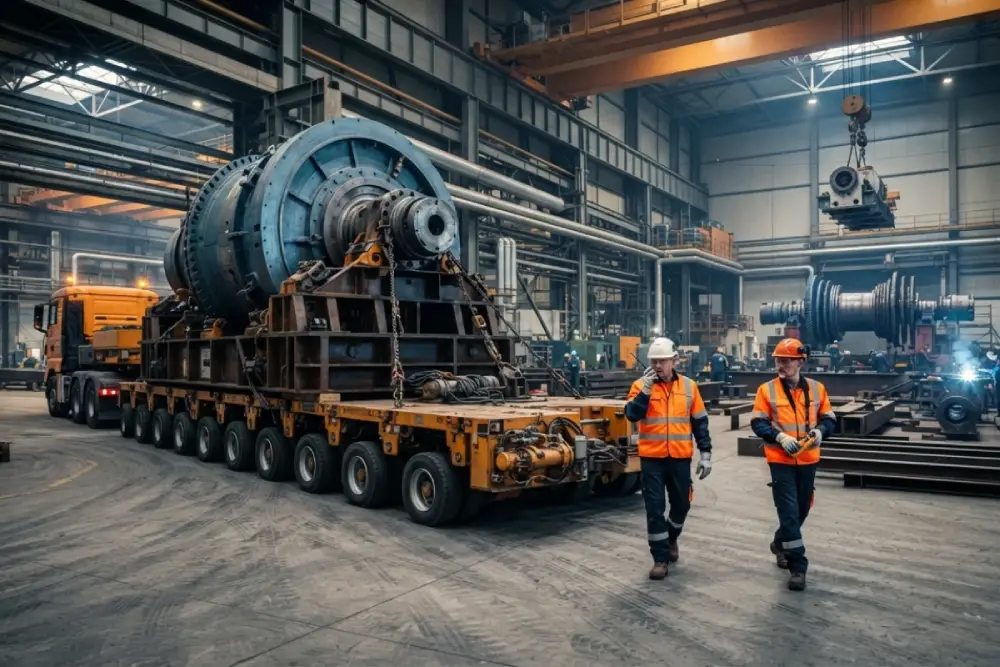
Moving industrial transformers, petrochemical distillation columns, offshore wind components, or full manufacturing assembly lines is an operation far removed from standard containerized logistics. In this tier of transport, an extra twenty centimeters in height or ten tonnes over standard bridge limitations demands structural route analysis, civil engineering interventions, and specialized heavy-haul mechanics.
Overlooking an axle load limit or failing to account for overhead wire clearances can leave multi-million-dollar cargo stranded in transit, triggering steep detention penalties and disrupting project delivery schedules. Executing project cargo shipping demands deep technical engineering, strict multimodal alignment, and seasoned regulatory handling. Below is a comprehensive blueprint addressing the planning, modes, risks, and execution strategies critical to managing oversized and heavy-lift consignments.
What Classifies as Project Cargo and Out-of-Gauge (OOG) Freight?
In international freight forwarding, cargo that exceeds standard transport dimensions—generally beyond a standard 40-foot box (12.03m length, 2.35m width, 2.39m height) or surpassing standard highway payload thresholds (typically 20 to 24 metric tonnes)—enters the realm of Out-of-Gauge (OOG) or Heavy Lift. When these movements directly support industrial construction, power plant assembly, or resource extraction, they fall under the discipline of project cargo logistics.
Key distinctions separating project cargo from common freight include:
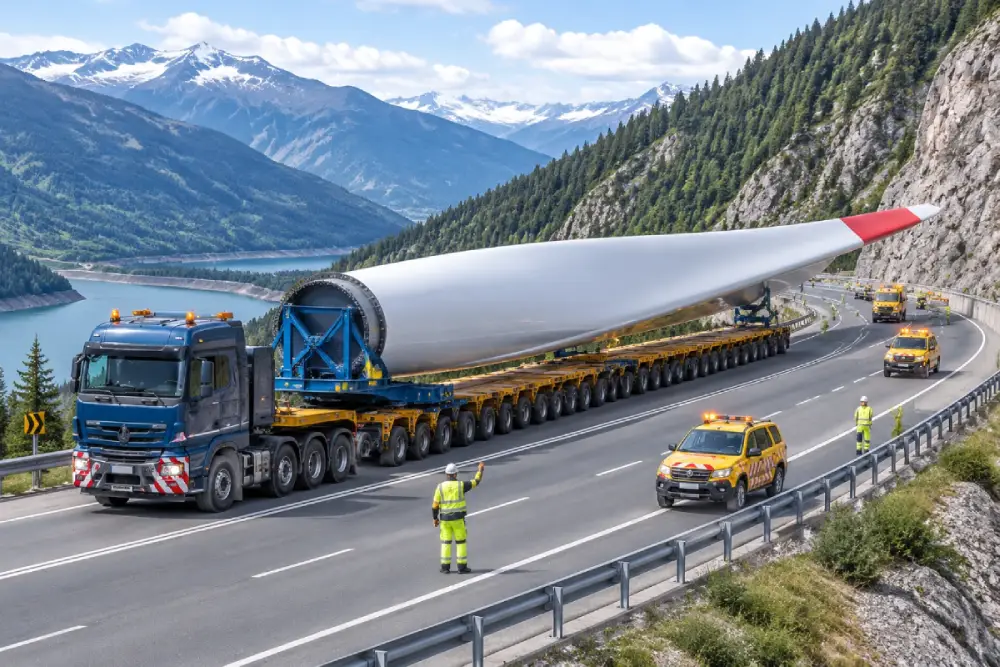
- Mandatory Route and Swept-Path Surveys: Conducting physical and 3D simulation assessments of corridors, bridge load-bearing limits, overhead obstructions, and road curvatures before dispatch.
- Engineered Securing and Rigging: Formulating precise stowage, lifting, and lashing plans approved by structural and marine warranty surveyors.
- Customs and Multi-Jurisdictional Permitting: Obtaining statutory oversized permits, police escorts, and customized border passage clearances across transit corridors.
The Foundation: Route Surveys and Feasibility Studies
A heavy-lift transport is won or lost during the surveying stage, weeks before the first sling is fastened. A thorough assessment covers three vital areas:
Geometric Clearances and Obstacle Mapping
Road surveys identify fixed pinch points that cannot accommodate excessive dimensions:
- Minimum vertical clearance beneath rail overpasses, toll plazas, and high-voltage transmission lines.
- Turning radii at highway off-ramps, roundabouts, and narrow urban junctions.
- Road gradient analyses to determine whether auxiliary push-pull prime movers are required.
Civil Infrastructure and Structural Capacity
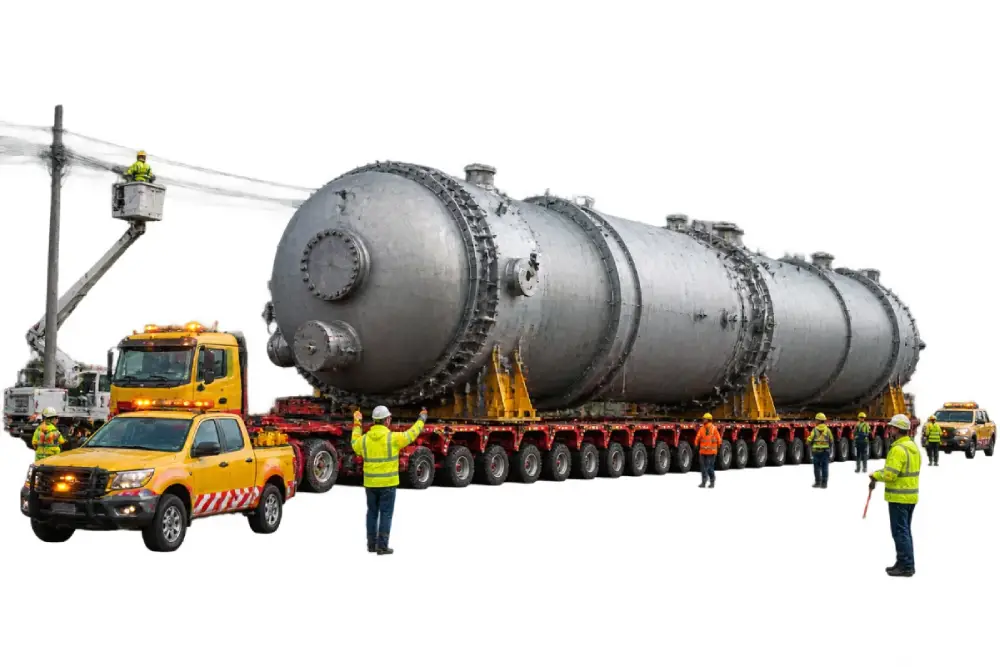
Transporting concentrated loads exceeding 100 tonnes requires verified civil calculations. Highway authorities must cross-reference total gross vehicle weights against bridge ratings. In critical cases, temporary steel plate bridges, flyover bypasses, or hydraulic levelling via multi-axle modular trailers are deployed to balance axle load distribution.
Permitting and Escort Regimes
Oversized freight cannot move without specialized permits that dictate legal travel windows—frequently restricted to night hours or weekend periods—alongside dedicated pilot vehicle escorts to safeguard traffic flows.
Multimodal Transport Solutions for Oversized Freight
Complex capital projects rarely rely on a single transit mode. Working alongside a capable international freight forwarding company ensures seamless connectivity across marine terminals, rail networks, and overland roads.
Road Transport and Specialized Running Gear
The primary backbone of industrial plant delivery relies on specialized road freight transport. Fleet choices adapt dynamically to load profiles:
- Lowbed and Step-Deck Trailers: Lowering the load floor close to the roadbed to clear low-overhead structures.
- Extendable/Telescopic Trailers: Accommodating long, self-supporting items like bridge girders and wind turbine blades up to 70+ meters.
- Self-Propelled and Towed Modular Transporters (SPMT / Hydraulic Trailers): Multi-axle systems with hydraulic steering and suspension that equalize heavy weights across hundreds of wheels.
Heavy-Haul Rail Freight Solutions
Where track infrastructure and loading gauges permit, rail freight transport delivers exceptional safety and cost efficiency for heavy machinery across vast continental distances, notably along Eurasian trade routes. Specialized flat wagons, depressed-center cars, and heavy-capacity Schnabel wagons suspend enormous pressure vessels directly between rail bogeys.
Marine and Vessel Options
Ocean crossings require specialized vessel architectures tailored to heavy and odd-sized cargo:
- Flat Rack & Open Top Containers: For components moderately exceeding container boundaries, shipped on standard cellular container vessels.
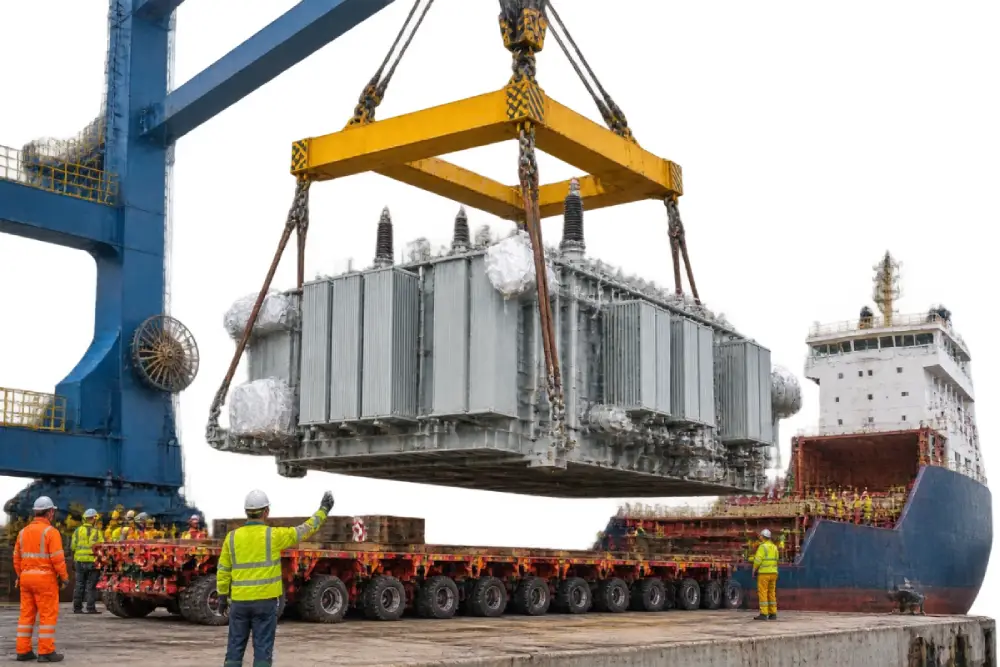
- Breakbulk and General Cargo Vessels: Geared vessels equipped with shipboard heavy-lift cranes capable of tandem lifts exceeding 500 tonnes.
- Roll-On/Roll-Off (Ro-Ro) and Deck Carriers: Ideal for wheeled machinery, rail cars, and pre-assembled industrial modules rolled directly aboard via stern ramps.
Mitigating Operational and Structural Risks
The scale of capital assets carried creates distinct vulnerabilities that must be actively managed:
Cargo Securing, Acceleration Forces, and Lashing Plans
Whether subject to dynamic roll, pitch, and heave in open ocean transit, or longitudinal braking forces on highway descents, cargo lashing must follow strict IMO and DGUV technical codes. Turnbuckles, high-tensile chains, and custom welded dunnage cradles prevent any micro-movement that could destabilize stability margins.
Customs Integration and Duty Structuring
Project machinery frequently involves complex knocked-down lines, split shipments, or second-hand operational assets. Comprehensive transit services coordinate prior customs classifications, ATA Carnets, or temporary imports under bond, keeping goods moving smoothly through critical border interfaces.
Marine Warranty Surveys and Insurance
Standard cargo insurance policies rarely fit complex logistics operations. Specialized project cargo marine coverage—supported by accredited Marine Warranty Surveyors (MWS)—ensures that loading, rigging, sea-fastening, and discharge operations comply strictly with policy warrants, shielding operators from catastrophic liability.
Strategic Value of Expert Project Freight Handlers
Completing industrial developments within scheduled project milestones requires uncompromising logistics precision. A single missing transformer or cracked turbine housing can idle an entire workforce, producing steep downstream project penalties.
An established international moving and logistics company moves beyond basic asset provision, acting as an engineering and operational partner through every milestone.
Operating across integrated road, rail, sea, and air modalities, Apadana International Transport Company provides turnkey project logistics, custom route planning, and heavy-lift management. Through precision route analysis, dedicated rigging coordination, and streamlined clearance management, critical equipment reaches project sites intact and fully aligned with construction schedules.
Practical Matrix: Choosing the Right Transport Profile
| Cargo Profile | Primary Constraint | Preferred Mode | Specialized Equipment |
|---|---|---|---|
| Long structural elements (blades, beams) | Swept-path turning radius | Road / Rail | Extendable platform trailers |
| Large pressure vessels & columns | Overhead clearance & total weight | Waterway + Road | Lowbed trailers / SPMT modules |
| High-volume project components | Assembly synchronization | Rail / Intermodal | Flat rack & open top containers |
| Extreme heavy-lift assets (>150t) | Bridge capacities & point load limits | Heavy-Lift Vessel + SPMT | Heavy geared ships / Multi-axle hydraulic sets |
Critical Pitfalls to Avoid in Project Cargo Logistics
- Miscalculating Gross Dimensions with Crating: Providing bare machinery specs rather than packed footprint measurements leads to equipment rejections at terminal gates or sudden permit invalidation.
- Overlooking Unloading Cranes on Site: Bringing a 60-tonne generator to an undeveloped construction location without early positioning of mobile crane equipment causes costly carrier demurrages.
- Ignoring Seasonality and Ground Stability: Failing to plan for thaw seasons, winter ice, or monsoon washouts on temporary haul roads frequently strands heavy vehicles in unpaved site areas.
Frequently Asked Questions (FAQ)
What defines an Out-of-Gauge (OOG) shipment?
An OOG consignment is any single cargo piece whose external dimensions exceed the internal usable space of standard 20ft or 40ft dry sea containers, requiring open-top, flat-rack, or breakbulk configurations.
What is an SPMT and when is it required?
A Self-Propelled Modular Transporter (SPMT) is a multi-axle platform with electronically controlled steering and hydraulic suspension. It is deployed when cargo weights exceed the point-load capacities of standard trailers, enabling uniform weight distribution and 360-degree maneuverability.
Why is a route survey non-negotiable for heavy-lift cargo?
A route survey verifies that every bridge, turn, overpass, and overhead line along a planned transit corridor physically accommodates the loaded transport, preventing structural collisions or roadside stranding.
How does project cargo insurance differ from regular marine cargo cover?
Project cargo insurance includes specialized riders covering delay in startup (DSU), unloading and rigging operations, and demands physical inspections by certified Marine Warranty Surveyors prior to movement.