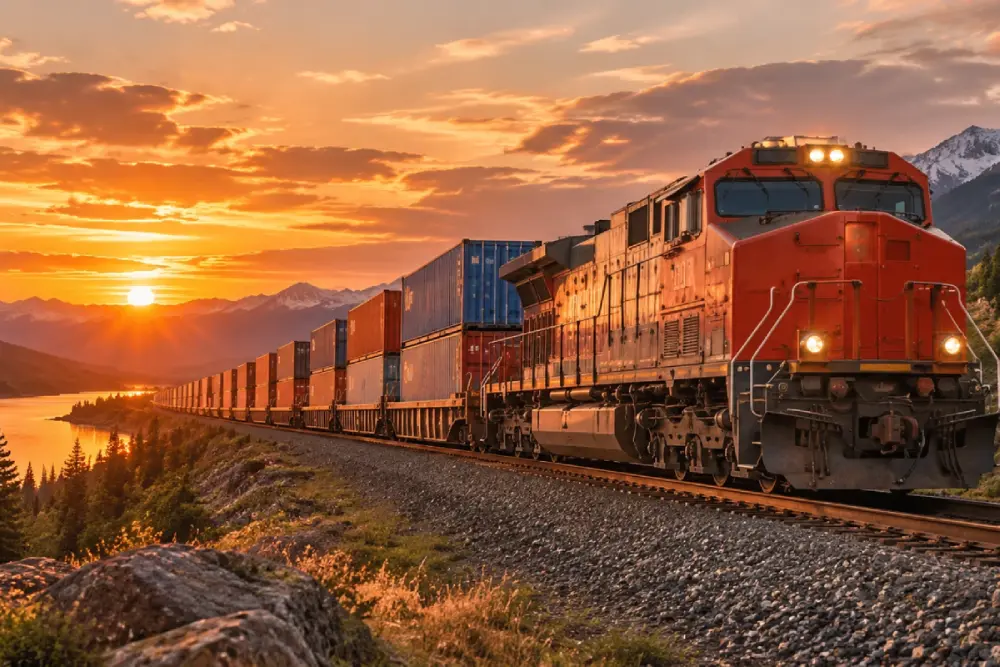
Rail is often one of the most practical options for moving commercial cargo across neighbouring countries and major continental trade corridors. It can carry high volumes, offers more predictable transit planning than many road routes, and may provide a useful balance between transit time and cost. But before arranging a shipment, shippers usually need a clear answer to one question: how are Rail freight tariffs actually calculated?
There is no single universal rail price. A shipment moving between two countries may involve rail operators, border stations, customs authorities, wagon providers, terminal operators and trucking partners. The final price therefore depends on far more than the distance between origin and destination.
The cargo type, total weight, volume, wagon specification, route, border procedures, loading requirements and delivery terms all affect the quotation. A rate that appears lower at first can become more expensive if it excludes terminal charges, cross-border handling, wagon detention or final delivery.
Apadana operates as an international freight forwarding company providing multimodal logistics solutions, including road, sea, air and rail services. For businesses comparing transport options, understanding the components behind rail pricing makes it easier to assess quotations properly and choose the right shipping structure.
What Is Included in a Rail Freight Tariff?
A rail freight tariff is the charge for moving cargo by rail between agreed points in the transport chain. Depending on the scope of service, it may cover only the rail leg, or it may include related services such as pre-carriage by truck, customs coordination, terminal handling, cross-border operations and delivery at destination.
For international shipments, the transport chain may include:
- Collection from the supplier or warehouse
- Delivery to the rail terminal
- Loading and securing the cargo in a wagon or container
- Export customs procedures
- Rail transport through one or more countries
- Border formalities and wagon interchange
- Unloading at the destination terminal
- Final delivery by road, where required
A useful quotation should state clearly which of these services are included. This matters because “rail freight” can mean different things in different offers.
The Main Factors That Determine Rail Freight Tariffs
Route and Rail Distance
The route is usually the starting point for calculating a rail quotation. However, the shortest route on a map is not always the cheapest or most operationally reliable route.
Rail networks are shaped by infrastructure availability, bilateral rail agreements, border capacity, transit-country regulations and train schedules. A route with fewer border crossings may have a higher base rate but lower operational risk. Another route may be cheaper on paper but involve longer waiting times at border terminals.
For international transportation, route planning should consider both price and practical movement conditions. The ideal route is not simply the one with the lowest rate per kilometre; it is the one that delivers the cargo with an acceptable balance of cost, timing and risk.
Cargo Weight, Volume and Density
Rail is well suited to heavy and high-volume cargo, but pricing is not always based solely on weight. The amount of wagon space occupied by the goods can be equally important.
A dense shipment of metal products may use the wagon’s weight capacity before filling its physical space. Conversely, lightweight goods in bulky packaging may fill the wagon before reaching the permitted weight limit. In either case, the commercial calculation may be based on a full wagon, a minimum chargeable volume or a project-specific rate.
To receive an accurate quotation, shippers should provide:
- Net and gross cargo weight
- Number of packages or pallets
- Dimensions of each package
- Packaging type
- Stackability information
- Whether the cargo is oversized or irregularly shaped
- Any loading or handling restrictions
Incomplete cargo data is one of the most common reasons a rail quote changes after booking.
Wagon Type and Equipment Requirements
Different goods require different wagons. The wagon type has a direct impact on Rail freight tariffs, availability and transit planning.
Common wagon types include covered wagons, open-top wagons, flat wagons, tank wagons, refrigerated wagons and specialised heavy-load equipment. Each comes with its own operating costs and technical restrictions.
For example:
- Covered wagons are commonly used for packaged goods, industrial materials and cargo requiring weather protection.
- Open-top wagons may be suitable for certain bulk commodities, construction materials and minerals.
- Flat wagons are often used for machinery, steel products, project cargo and large equipment.
- Tank wagons are required for liquids, chemicals and other regulated products.
- Refrigerated equipment may be necessary for temperature-sensitive food products or pharmaceuticals.
A specialised wagon may cost more than a standard unit, but choosing the wrong equipment can create greater expenses through cargo damage, delays or reloading requirements.
Full Wagon Load Versus Consolidated Cargo
Rail transport becomes particularly competitive when the shipper has enough cargo to use a full wagon or block of wagons. The rate in this case is usually calculated per wagon, per train section or according to a negotiated volume commitment.
Smaller consignments can be more complex. Consolidation may be possible on selected routes, but it depends on terminal capabilities, scheduled departures, compatible cargo and the availability of a consolidation programme. In some cases, the shipper may still need to pay a minimum full-wagon charge.
This is why rail transportation is often most attractive for regular flows, heavy machinery, raw materials, construction goods, industrial supplies and other cargoes that can justify wagon capacity.
Border Crossings and Transit Countries
International rail movements can involve several railway administrations and border terminals. Every border crossing may create additional documentation, handling, inspection or operational charges.
One particularly important issue is rail gauge compatibility. In regions where neighbouring countries use different track gauges, cargo may require either:
- Bogie exchange, where the wagon’s wheel assemblies are changed; or
- Transloading, where cargo is transferred into another wagon.
Both options can affect cost and transit time. The right approach depends on the type of goods, packaging, route, handling facilities and final destination.
Where the cargo passes through multiple transit countries, the quotation may also include transit charges, railway administration fees, station handling and local operational costs.
Terminal Handling and Loading Services
The main rail haul is only one part of the total cost. Cargo must still be loaded, secured, handled at terminals and unloaded at destination.
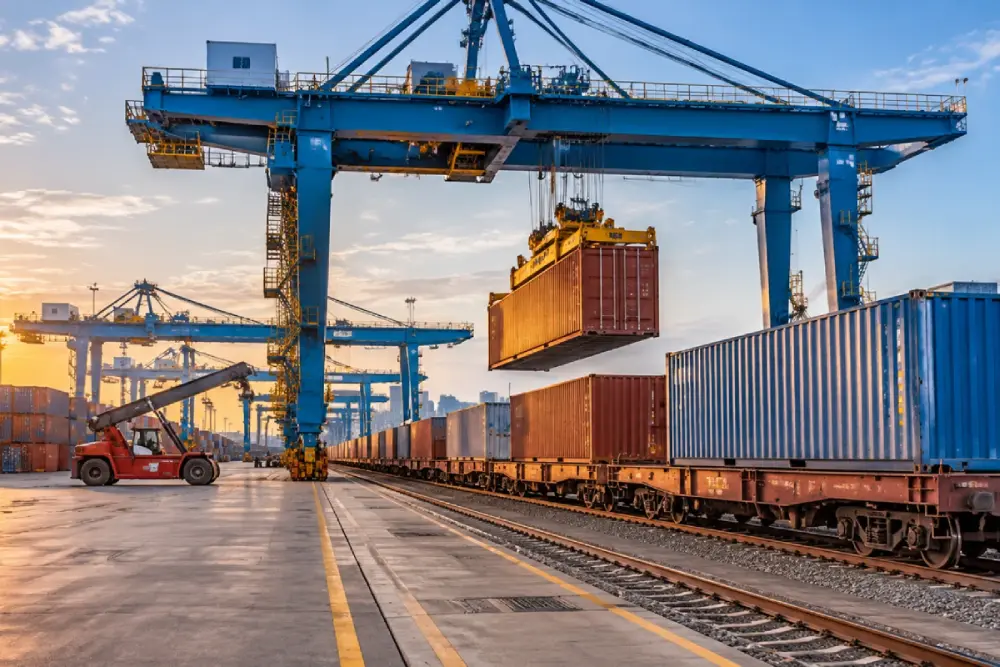
Depending on the cargo, terminal services may include forklift use, crane lifting, lashing, blocking and bracing, weighing, sealing, pallet handling or warehouse storage. For project cargo and heavy machinery, these services can represent a significant share of the overall logistics budget.
Before confirming a shipment, ask whether the quotation includes:
- Loading at origin terminal
- Unloading at destination terminal
- Wagon positioning and shunting
- Cargo securing and lashing
- Terminal storage
- Weighing and sealing
- Documentation fees
- Container handling, where applicable
A transparent quotation separates these items or clearly identifies them as included.
A Practical Formula for Estimating Rail Costs
Rail operators and freight forwarders use different commercial models, but a rail shipment can generally be viewed through the following structure:
Total rail transport cost = Base rail rate + wagon or equipment charge + border costs + terminal handling + customs/documentation costs + additional services
Consider a company shipping industrial equipment to a landlocked market. The total cost may include collection by truck, export customs clearance, loading into a covered wagon, rail transport through a transit country, border gauge-change handling, destination terminal charges and final delivery.
The base rail rate is important, but it is not the entire budget. A proper comparison should always use the total landed logistics cost for the agreed delivery point.
How Rail Freight Rates Are Quoted
A rail quotation may be presented in several ways, depending on the cargo and route:
- Per wagon
- Per metric ton
- Per ton-kilometre
- Per container
- Per pallet or package
- Per project shipment
- Per block train or contracted volume
Bulk commodities are commonly quoted on a tonnage basis. Equipment, industrial cargo and packaged freight may be priced per wagon. Containerised shipments may be quoted per container size and type, with separate terminal and rail movement charges.
The unit of pricing matters because it determines how the rate will change if cargo volume, weight or equipment requirements change.
Currency, Surcharges and Quotation Validity
International rail costs may be quoted in local currency, US dollars, euros or another agreed currency. Exchange-rate movement can affect the final invoice, especially when the shipment involves several countries or subcontractors.
A reliable quotation should clarify:
- The currency used for the quote
- The quotation validity period
- Whether fuel, security or operational surcharges apply
- Whether customs, tax or duty-related charges are excluded
- Which party is responsible for detention, storage or delays
- Whether border charges are fixed or estimated
Shippers should also confirm whether the rate is subject to revision before departure. This is particularly important for long-term procurement contracts or recurring shipments.
Rail Versus Road, Sea and Air Freight
Rail Freight Compared With Road Freight
Rail can be an efficient choice for long distances and high cargo volumes. It is often valuable when a shipper needs to move heavy cargo consistently between rail-connected industrial areas.
Road freight offers more flexibility for door-to-door collection and delivery. It may be the better option for smaller consignments, urgent cargo or destinations without direct rail access. In many real-world cases, the best model is a combined rail-and-road solution rather than a choice between one mode and the other.
Rail Freight Compared With Ocean Freight
Ocean freight is generally the preferred solution for large intercontinental volumes and port-to-port movements. However, rail can be faster for certain continental and landlocked destinations, especially where a cargo flow can use established rail corridors.
A sea-rail combination can also be practical. Cargo may arrive at a port by vessel and continue inland by rail, reducing reliance on long-distance trucking.
Rail Freight Compared With Air Freight
Air freight is designed for speed, but its cost is significantly higher. Rail can be a useful alternative for cargo that is time-sensitive but does not justify airfreight pricing.
This can include industrial components, production inputs, commercial stock replenishment and medium-to-large consignments where a balance of lead time and cost is required.
Charges That May Not Appear in an Initial Quote
An initial rail rate does not always cover every possible cost. Depending on the shipment, additional charges may include:
- Cargo insurance
- Customs examination or inspection costs
- Warehouse storage
- Wagon detention charges
- Documentation amendments
- Domestic pickup or final-mile delivery
- Special packaging or cargo securing
- Rehandling caused by incorrect cargo data
- Fees resulting from delayed customs clearance
This does not mean the quotation is misleading. It means that some costs can only be calculated once the shipment details and operational conditions are confirmed. The key is to request a written scope of service and a list of exclusions.
How to Request an Accurate Rail Freight Quote
The quality of a quotation depends heavily on the information provided. When asking an international freight forwarding company for a rail freight estimate, prepare the following details:
- Exact origin and destination, including city, station or terminal
- Cargo description and commodity type
- HS code, if available
- Net and gross weight
- Package count and dimensions
- Packaging method
- Cargo value for insurance assessment
- Required pickup and delivery terms
- Cargo-ready date
- Need for special wagons, containers or handling equipment
- Available shipping documents, including commercial invoice and packing list
The more complete the information, the more dependable the price and transit plan will be.
Common Mistakes When Comparing Rail Freight Tariffs
Comparing Only the Headline Price
A lower rate is not necessarily a lower total cost. One offer may cover rail movement only, while another may include terminal work, border handling and delivery coordination.
Using the Wrong Wagon Type
Selecting equipment based purely on price can cause operational problems. Cargo that needs weather protection, special securing or controlled temperature must be assigned to appropriate equipment.
Understating Dimensions or Weight
Oversized or heavy cargo requires careful planning. Incorrect dimensions can lead to rejected loading plans, unexpected handling fees or delays at the terminal.
Ignoring Border Transit Time
Border procedures can influence both timing and cost. Incomplete documentation, missing permits or unclear cargo descriptions may result in storage and detention charges.
How Apadana Supports International Rail Shipments
Apadana can assess rail as part of a broader international transportation strategy rather than treating it as an isolated service. This matters because the most suitable logistics plan may involve rail for the main corridor, road transport for pickup and final delivery, or sea freight combined with inland rail movement.
For example, a shipment may be more economical when transported by rail to a regional hub and then delivered by truck. Another cargo flow may work best through a port, followed by rail transport to an inland destination. A multimodal review helps businesses avoid choosing a transport mode based only on a single headline rate.
Conclusion
Rail freight tariffs are calculated through a combination of route, distance, cargo weight and volume, wagon type, border procedures, terminal services, documentation and additional logistics requirements. There is no meaningful “standard rate” without a clear understanding of the cargo and the delivery scope.
For heavy, high-volume or regularly moving cargo, rail transportation can offer an effective balance of cost, capacity and schedule reliability. The best way to obtain a realistic quotation is to provide complete cargo details, confirm what is included in the rate and compare offers on a like-for-like basis.
Frequently Asked Questions
How are international rail freight tariffs calculated?
They are calculated based on the route, rail distance, cargo weight and volume, wagon type, border crossings, terminal handling, documentation and any required additional services.
Is rail freight always cheaper than road freight?
No. Rail is often competitive for long-distance, heavy or high-volume shipments, while road freight may be more cost-effective for smaller consignments, urgent deliveries or locations without rail access.
Does a rail freight rate include customs clearance?
Not always. Customs services may be included, offered as an additional service or handled separately. Always check the quotation scope.
What information is needed for a rail freight quotation?
You should provide the origin and destination, cargo description, weight, dimensions, packaging, number of packages, cargo-ready date and required delivery terms.
Can rail freight be used for sensitive or valuable cargo?
Yes. With the right wagon type, secure packaging, proper cargo securing and insurance arrangements, rail can be suitable for many industrial, commercial and sensitive cargo types.