




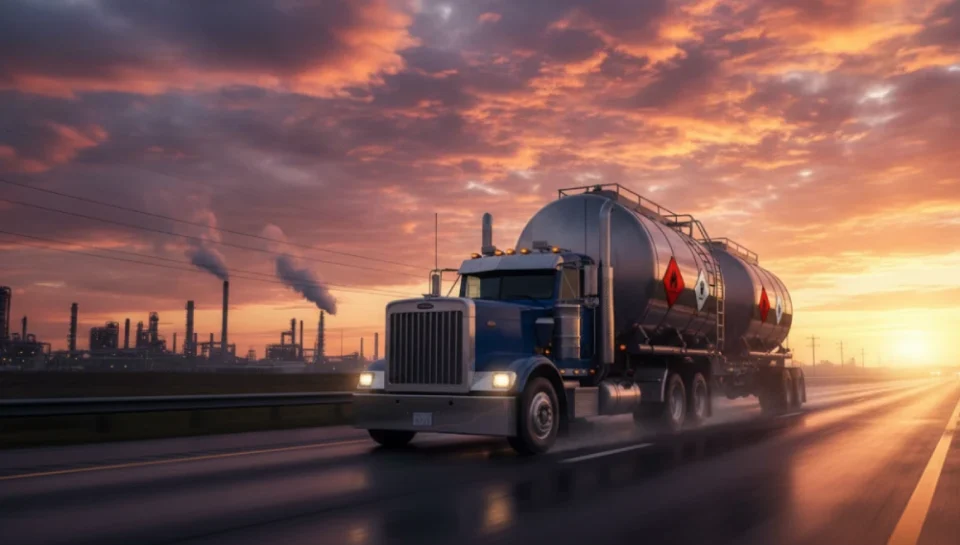
Years ago, when I first encountered a chemical shipment in our warehouse, I realized how complex and sensitive the world of dangerous goods transport really is. You couldn’t just place the cargo inside a container and send it down the road; every bottle, every drum, and every pallet needed to be packaged, labeled, and documented according to strict standards. Our team gained a lot of experience in those days, and now I want to share that knowledge with you.
If your company deals with chemicals, compressed gases, flammable liquids, or radioactive materials, you know that dangerous goods transport without adhering to international regulations is not only illegal—it can endanger human lives and the environment. In this article from Apadana International Transport, we explore ADR and IMDG regulations in simple yet professional terms.
What is ADR and Why Is It Critical for Dangerous Goods Transport?
ADR stands for “Accord européen relatif au transport international des marchandises dangereuses par route” — the European Agreement concerning the International Carriage of Dangerous Goods by Road. This regulation was adopted in Geneva in 1957 and now covers more than 50 countries worldwide, including Iran.
History and Objectives of ADR
The main objective of ADR is to ensure that dangerous goods transport by road vehicles is carried out safely, so that:
- The lives of drivers, transport crews, and other road users are protected
- The environment is not harmed
- Goods reach their destination intact
- Border procedures use a common language
Structure of the ADR Regulation
The ADR agreement is summarized in two main Annexes:
- Annex A: Classification of dangerous goods, packaging, labeling, and documentation
- Annex B: Vehicle requirements, equipment, driver training, and transport operations
When it comes to dangerous goods transport by road, it doesn’t matter whether your destination is Turkey, Azerbaijan, or Europe—ADR compliance is mandatory, and customs authorities at borders inspect these regulations meticulously.
IMDG: The Golden Rule for Dangerous Goods Transport by Sea
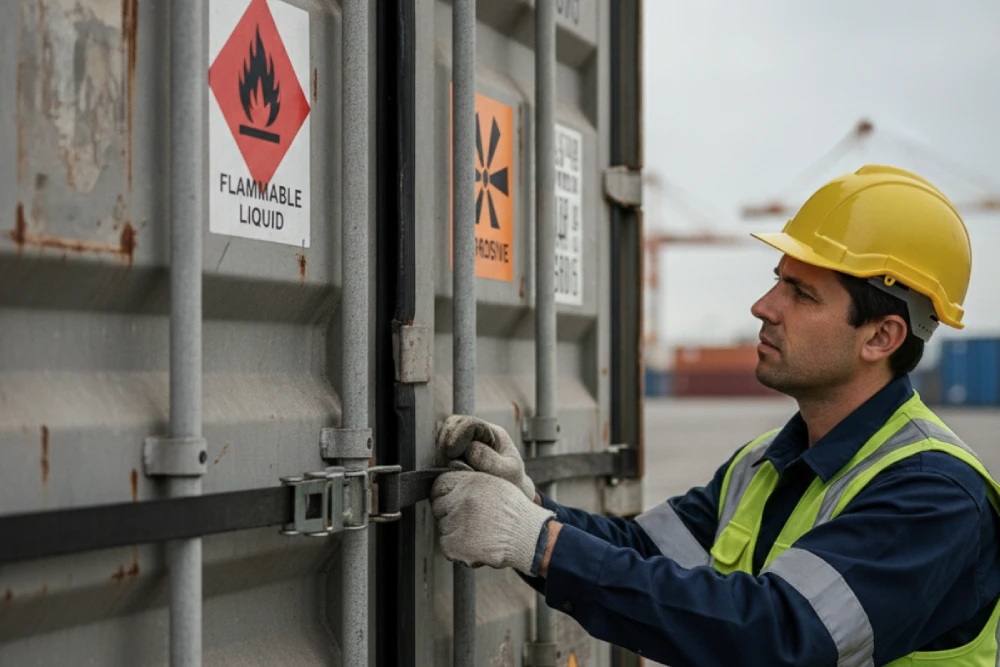
If your dangerous goods are to be shipped by vessel, ADR regulations no longer apply. The sea has its own world, and maritime dangerous goods transport is governed by the International Maritime Dangerous Goods Code (IMDG), developed by the International Maritime Organization (IMO).
Why is IMDG Essential for Maritime Transport?
Cargo vessels may carry hundreds of containers simultaneously. If a single container holding flammable materials is not properly packed, the risk of explosion or fire threatens the entire ship. IMDG is designed precisely for this:
- Proper segregation of incompatible goods from each other
- Determining packaging and temperature conditions
- Requirements for container stowage and storage
- Emergency procedures in case of leakage or accident
Key Differences Between ADR and IMDG
| Feature | ADR (Road) | IMDG (Sea) |
|---|---|---|
| Route type | Road | Maritime |
| Legal basis | UNECE | IMO |
| Update frequency | Every 2 years | Every 2 years |
| Packaging requirements | UN standard | UN standard + maritime resistance |
| Documentation | CMR + ADR | Bill of Lading + IMDG |
| Labeling | Hazard labels | Labels + marine placards |
Maritime transport is one of Apadana’s specialties, and our operations team is fully familiar with the subtle differences between these two regulations.
Classification of Dangerous Goods: 9 Main Classes
Every international regulation divides dangerous goods transport into 9 classes based on the nature of the substance. Accurate recognition of these classes is the first step toward safe shipping:
Class 1: Explosives
Materials such as TNT, fireworks, and ammunition. These are highly sensitive and their transport conditions are extremely strict.
Class 2: Gases
Flammable gases (such as propane), toxic gases (such as chlorine), and inert gases (such as nitrogen). These are typically transported in high-pressure cylinders.
Class 3: Flammable Liquids
Gasoline, alcohol, toluene, and many industrial solvents fall into this category. This constitutes the largest volume of dangerous goods transport in the world.
Class 4: Flammable Solids
Materials such as white phosphorus, powdered zinc, and certain polymers that may ignite upon contact with air or water.
Class 5: Oxidizers and Organic Peroxides
Substances that accelerate combustion or react with fire. Ammonium nitrate is the most famous example.
Class 6: Toxic and Infectious Substances
Industrial poisons, pesticides, and biological materials such as laboratory samples.
Class 7: Radioactive Materials
Medical isotopes, nuclear fuel, and equipment containing radioactive elements.
Class 8: Corrosives
Sulfuric acid, sodium hydroxide, and other materials that damage living tissue.
Class 9: Miscellaneous Dangerous Goods
Materials that don’t fit into any other class but are still hazardous, such as lithium batteries and asbestos.
Required Documentation for Dangerous Goods Transport
Perhaps the most challenging part is preparing the documents. My experience shows that more than 60% of dangerous goods transport problems stem from incomplete or incorrect documentation. These documents include:
Main Documents
- Dangerous Goods Declaration (DGD): Completed by the shipper
- MSDS (Material Safety Data Sheet): Chemical safety data sheet
- Pro forma and commercial invoice with the exact UN name
- Packaging compliance certificate: Confirming UN-standard packaging
- Special permits: For certain goods such as radioactive materials, clearance from nuclear authorities is required
Document Format and Language
Documents must be prepared in English (and in some countries, the local language). The exact chemical name, UN number, hazard class, and packing group must be included.
International logistics without proper documentation means cargo being held at borders. Apadana’s administrative team, with its long track record in dangerous goods transport, knows exactly what each customs authority requires and with what level of detail.
Packaging, Labeling, and Marking
UN Packaging Standards
Packaging for dangerous goods transport must comply with UN standard codes. Each package must:
- Withstand impact, pressure, and temperature conditions
- Not react chemically with its contents
- Pass drop tests, pressure tests, and leak tests three times
Package marking includes:
- UN number and proper shipping name
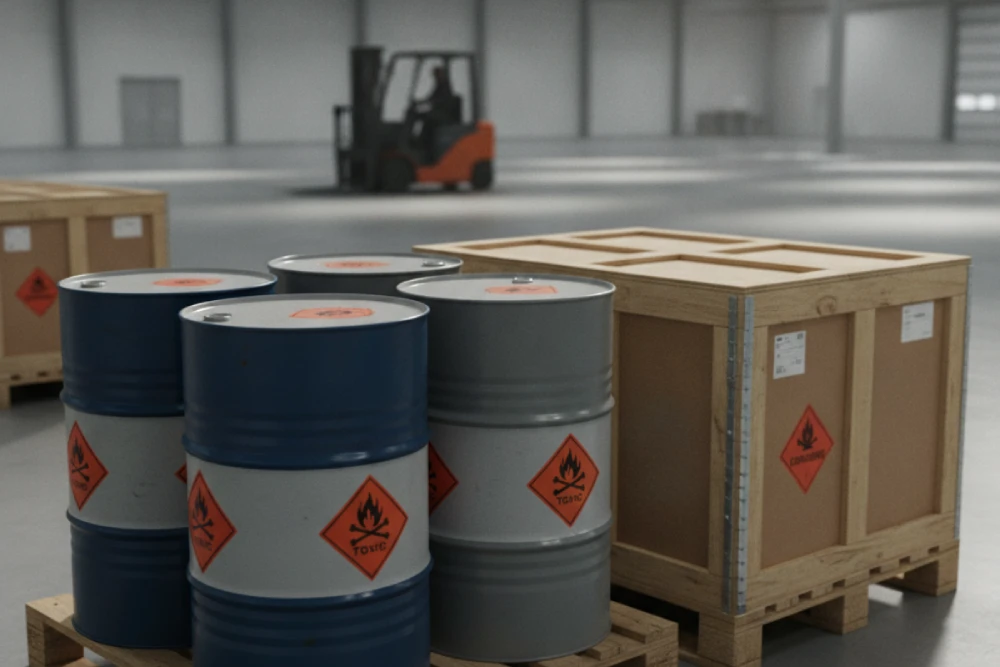
- Hazard symbols (diamond-shaped labels)
- Orientation arrows (if required)
- Special warnings (such as “keep away from heat”)
Hazard Labels
Each hazard class has its own label:
- Red: Flammable
- Blue: Corrosive
- Yellow over white: Radioactive
- Green: Non-flammable gas
- And more…
In road transport per ADR, orange placards showing the UN number and hazard code must be displayed on trailers or trucks. In maritime transport per IMDG, placards must cover all four sides of the container.
Vehicle and Driver Requirements Under ADR
Vehicle Requirements
A vehicle used for dangerous goods transport must:
- Have an ADR Certificate of Approval
- Have spark-proof (ATEX) engine and electrical systems
- Carry appropriate fire extinguishers
- Display hazard warning signs and warning lights
- Some vehicles require grounding systems
Driver Training
The driver must hold an ADR Training Certificate, renewed every 5 years. Training courses include:
- Understanding material hazards
- Safety equipment and leak response
- Behavior during accidents and fires
- Documentation requirements during transit
At Apadana, all drivers on our dangerous goods transport team undergo annual refresher training. Our emphasis is always: “no shipment moves without a trained driver.”
Dangerous Goods Transport by Different Modes: Road, Air, and Rail
Road Transport with ADR
Road transport is the most common method for dangerous goods transport in Iran. Trailers must be equipped with load securing devices, proper ventilation systems for specific materials, and standard placards. At transit borders to Turkey, Iraq, and Central Asian countries, customs authorities strictly inspect placard conformity with contents.
Rail Transport of Dangerous Goods
Rail transport follows RID regulations (similar to ADR for rail). The advantage of rail for dangerous goods transport is reduced risk of road accidents and high simultaneous capacity. Of course, care must be taken to ensure specialized wagons and safety separators are installed per regulations.
Air Transport with IATA-DGR
Air transport of dangerous goods follows IATA-DGR regulations, which are among the strictest. Many goods are entirely prohibited from air transport, and certain hazardous materials can only be carried on freighter aircraft. Air transport is common for goods such as lithium batteries or certain pharmaceuticals.
Limited Quantities and Exceptions: Don’t Overlook These!
Many businesses don’t realize that dangerous goods transport in Limited Quantities or Excepted Quantities is exempt from many requirements. If the quantity is below the threshold, placards, trained drivers, and full documentation are not required.
This means many companies engaged in freight transport can actually reduce costs significantly by using the limited quantity provisions. However, these exemptions vary at borders, and professional consultation is essential.
Responsibilities in the Dangerous Goods Chain
Shipper Responsibilities
- Correct classification and identification of the material
- UN-standard packaging
- Preparing DGD and MSDS documents
- Ensuring placards match contents
Carrier Responsibilities
- Reviewing documents before loading
- Visual inspection of packages
- Complying with time restrictions and authorized routes
- Carrying fire extinguishers and emergency equipment
Consignee Responsibilities
- Timely notice for unloading
- Complying with storage conditions after delivery
- Safe disposal of hazardous residues
In Apadana’s international transport contracts, all these responsibilities are clearly assigned to eliminate any ambiguity in case of an incident.
Accidents and Risk Management in Dangerous Goods Transport
Most Common Incidents
- Leakage of flammable liquids during loading or unloading
- Fire from incompatible material reactions
- Gas cylinder explosions at high temperatures
- Package damage in road accidents
Emergency Procedures
- Use proper personal protective equipment appropriate to the hazard class
- Isolate the incident site
- For fire, never use water on water-reactive materials
- Contact environmental authorities and fire services immediately
Freight forwarding (customs clearance coordination) on routes involving dangerous goods transport must maintain continuous communication with the driver and technical team so that the fastest possible response occurs in any incident.
Regulations Governing Dangerous Goods Transport in Iran
In Iran, the following organizations oversee dangerous goods transport:
- Road Maintenance and Transport Organization: Issuing permits for dangerous road cargo
- Environmental Protection Agency: Supervising disposal of hazardous waste
- Customs and Border Control: Clearance and application of border regulations
- Ministry of Health: For pharmaceutical and biological materials
For customs clearance, full conformity between the declaration, DGD, and the physical content of the shipment is mandatory. Any discrepancy can lead to heavy fines or cargo confiscation.
How to Choose the Right Carrier for Dangerous Goods
If you ask around, you’ll find that companies genuinely specialized in dangerous goods transport can be counted on one hand. Points to consider when choosing your commercial partner:
- Track record in similar projects: The company should have at least several successful projects transporting your hazard class.
- Personnel training: Request valid ADR/IMDG certificates.
- Insurance policy: Coverage must include chemical and environmental risks.
- Software and infrastructure: The company should have cargo tracking software.
- Free consultation: A reputable company provides a free expert consultation session before contract signing.
Apadana, with extensive experience in dangerous goods transport, has partnerships with petrochemical companies, pharmaceutical firms, and chemical manufacturers in its portfolio. In addition to transport itself, our team provides customs clearance, special warehouse storage, and insurance services.

Conclusion
Dangerous goods transport is a specialized field in logistics that cannot be undertaken with an ordinary transport company. ADR and IMDG regulations act like two guiding wings—when properly implemented, they minimize the risk of accidents. Remember that a simple mistake in labeling or packaging can impose irreparable costs on health, the environment, and your business.
If you plan to send a shipment of dangerous goods, consult an experienced advisor before you begin. Apadana International Transport is by your side to navigate this complex path with full confidence. Simply contact our team to receive an accurate cost and time estimate in your first free consultation.
Frequently Asked Questions About Dangerous Goods Transport
Do I need special permission from the Iranian government for dangerous goods transport?
Yes, certain dangerous goods require a dispatch permit from the Road Maintenance and Transport Organization, issued after providing safety certificates and technical documentation. For specific materials like radioactive substances or chemical weapon precursors, separate security permits from relevant authorities (such as the Atomic Energy Organization) are also required.
Can I use exemptions for small quantities of dangerous goods?
Yes, if the quantity of hazardous material is below the threshold specified in ADR/IMDG (excepted quantities), placards, full documentation, and trained drivers are not required. However, this exemption depends on the hazard class and package type and must be verified with a specialist.
How much more expensive is dangerous goods transport compared to regular transport?
Typically, dangerous goods transport costs 20–50% more than regular transport, but the amount varies depending on the material type, hazard class, shipment volume, and mode (road/sea/air). Radioactive and explosive materials usually incur the highest costs.
Is there special insurance for dangerous goods?
Standard cargo insurance typically does not cover chemical and environmental risks. For dangerous goods transport, you need special chemical insurance that covers damages from leaks, fire, and environmental pollution. Apadana has agreements with reputable insurance companies and can arrange the best coverage for you.